Share:
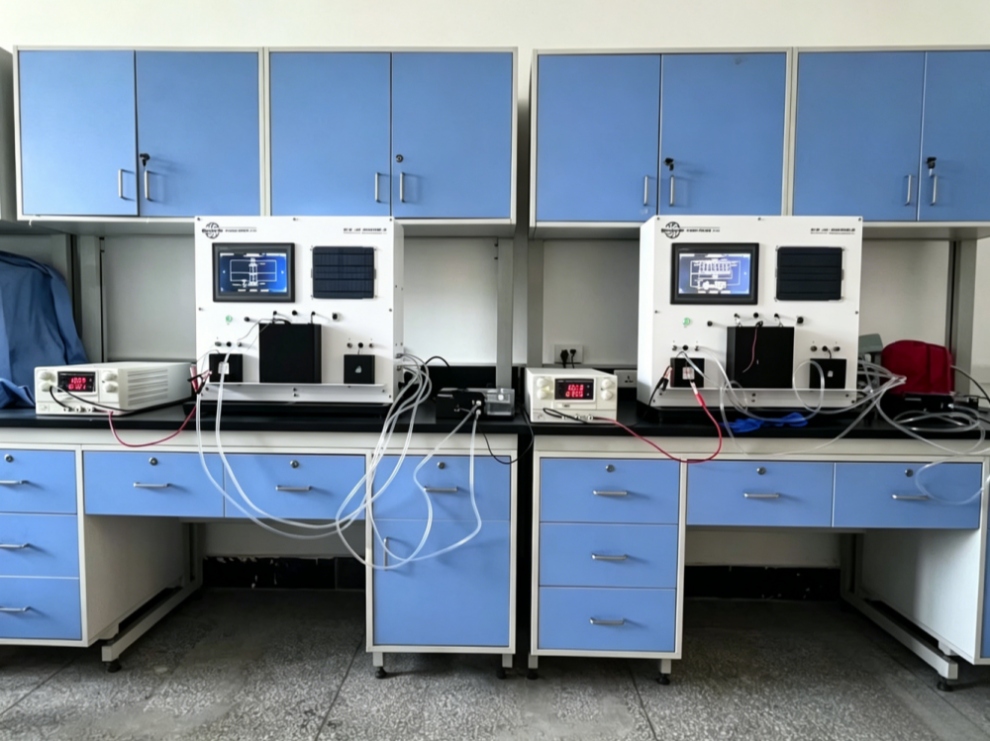
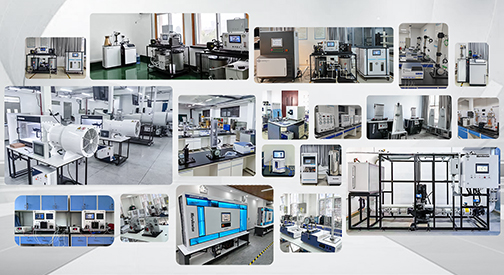
Our workshop has shipped a series of thermoelectric cooling experiment rigs built to teach the Peltier effect and solid state cooling. The rigs are on their way to a university laboratory, where they will support refrigeration, energy engineering, and new energy technology courses.
Most students first meet cooling equipment as a compressor and a refrigerant gas. A thermoelectric module works differently. When a direct current passes through a semiconductor chip, one face becomes cold while the other becomes hot, with no moving parts, no compressor, and no refrigerant. The result is quiet and easy to control, which is why the same technology appears in medical coolers, electronics chillers, and small clean energy systems.
The teaching apparatus is organized around one principle: a thermoelectric chip only performs when its hot side is actively cooled. Three interchangeable modules let students compare the main ways solid state cooling is used.
|
Module |
Setup |
What students control |
Main result |
|
Single chip |
one thermoelectric chip on its own |
supply voltage, hot side water flow |
maximum temperature difference and maximum cooling capacity |
|
Parallel array |
several chips share one cold plate and water loop |
total voltage, total current, input power |
how cooling capacity scales when current is shared evenly |
|
Solar powered |
same chips driven directly by a photovoltaic panel |
panel output voltage and current |
how cooling temperature drifts as sunlight changes |
Raising the voltage raises the current, yet the extra current also heats the hot side. Once the water loop cannot reject that heat fast enough, adding more current stops buying more cooling, and students see why the cold side load and hot side heat rejection must stay in balance.
The parallel array turns that balance into a lesson in scaling. More chips shift the cooling capacity upward, but only when every hot side stays cool and the current is shared evenly. That is the step from a textbook device to a system that could actually cool a small enclosure.
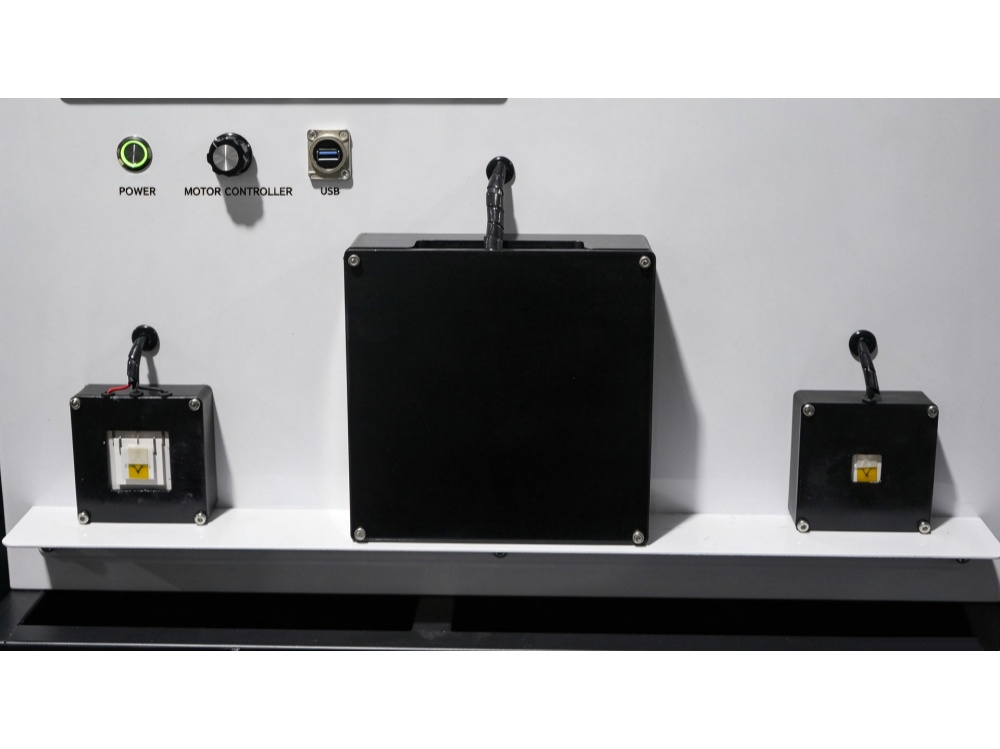
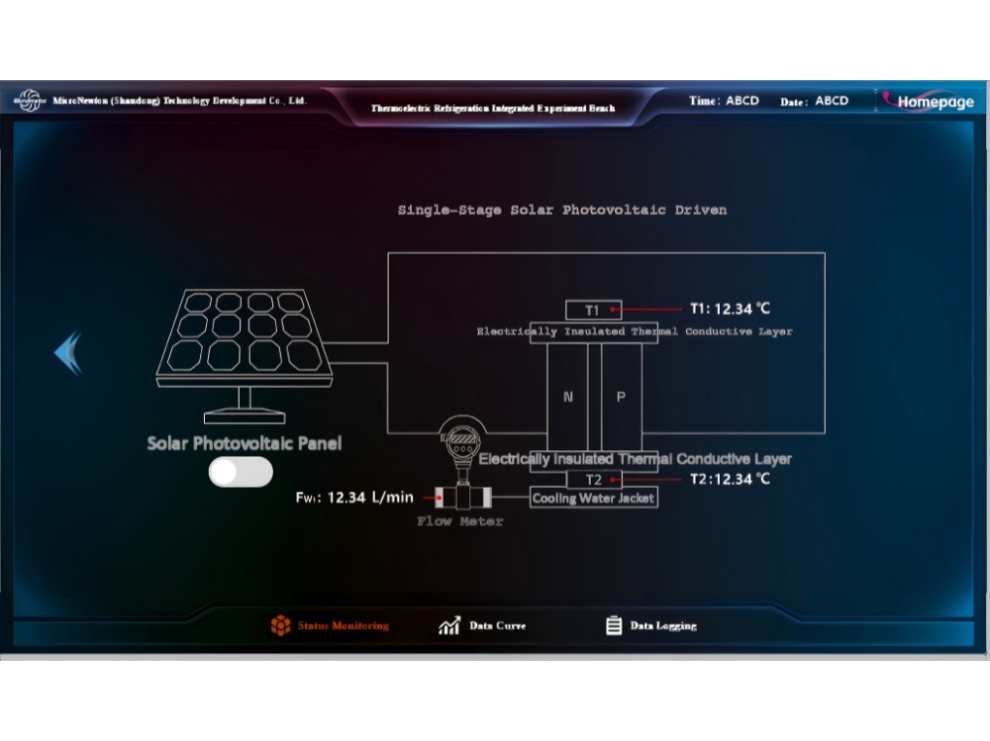
The solar powered module shows both the promise and the limit of clean cooling. Sunlight runs the solid state cooler with no fuel and no grid connection, while the cold side temperature drifts as the panel output changes through the day.
A touchscreen data acquisition terminal records temperature, voltage, current, power, and water flow across all three modules and exports the dataset for plotting. Students chart cooling capacity against input power, temperature difference against water flow, and solar cooling temperature against panel output. These curves turn the Peltier effect from a paragraph into a result students can trust.
The rigs serve undergraduates in building environment and energy engineering, energy and power engineering, new energy science, and refrigeration and cryogenics. They connect refrigeration principles, engineering thermodynamics, and new energy technology on a single bench frame, and prepare students for solid state cooling work in medical, electronics, and clean energy equipment.
Planning a thermoelectric or solid state cooling laboratory? Contact our team to configure a thermoelectric cooling experiment rig with the modules and sensors that match your courses.
What is thermoelectric cooling?
A direct current passes through a semiconductor chip so one face becomes cold and the other hot. The process has no moving parts, no compressor, and no refrigerant, so it is quiet and simple to control.
What modules does the experiment rig include?
The rig includes three interchangeable modules: a single chip, a parallel chip array on one cold plate, and a solar powered version driven directly by a photovoltaic panel.
What do students measure on the single chip module?
They vary the supply voltage and hot side water flow, read the steady cold and hot side temperatures, and derive the maximum temperature difference and maximum cooling capacity.
Why does more current not always give more cooling?
Extra current also heats the hot side. If the water loop and heat sink cannot reject that heat, the balance breaks and cooling stops improving.
What does the parallel array experiment show?
It shows that cooling capacity scales upward only when every hot side stays cool and the current is shared evenly across the chips.
How does the solar powered module demonstrate clean cooling?
The panel drives the chips directly, so sunlight provides cooling with no fuel. The cold side temperature still drifts as panel output changes through the day.
How are the readings recorded and exported?
The touchscreen data acquisition terminal logs temperature, voltage, current, power, and water flow, then exports the data for plotting and laboratory reports.