Share:
Engineering thermodynamics is the course students love to fear. Its objects are invisible: a gas inside a sealed vessel, a vapor changing phase, a cycle that turns heat into shaft work. Textbook diagrams draw pressure and temperature against volume, but the variables stay abstract until a student has actually pumped a vessel, watched it heat, and written down the numbers. A thermodynamics teaching bench exists to make those variables real.
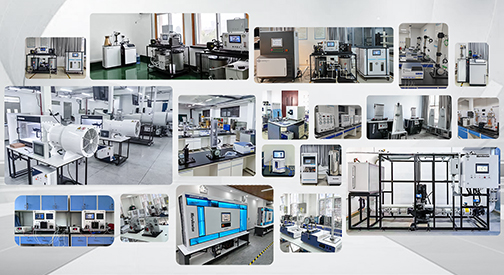
The core idea behind a good lab setup is simple. A common host unit measures temperature, pressure, flow, and electrical power for every attached module, while the modules themselves change what is being studied. One day the student is inside an air tank, the next inside a capillary filled with carbon dioxide, and the next watching a small steam turbine spin. The instruments stay familiar, so the student can concentrate on the physics rather than learning a new machine each week.
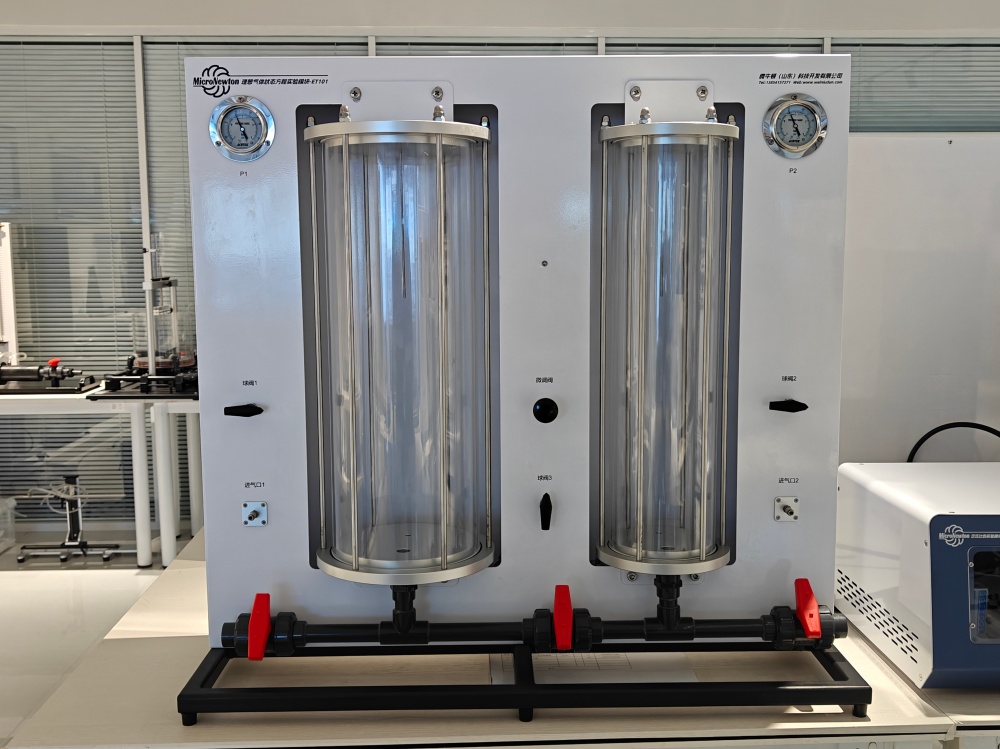
The journey usually starts with the ideal gas relation. In a transparent vessel module, students pump air to a known pressure, hold temperature constant, and trace the isothermal path, then repeat at fixed volume to see how pressure climbs with temperature. These two small experiments are what make pressure volume equals n R T feel like a measurement rather than a formula.
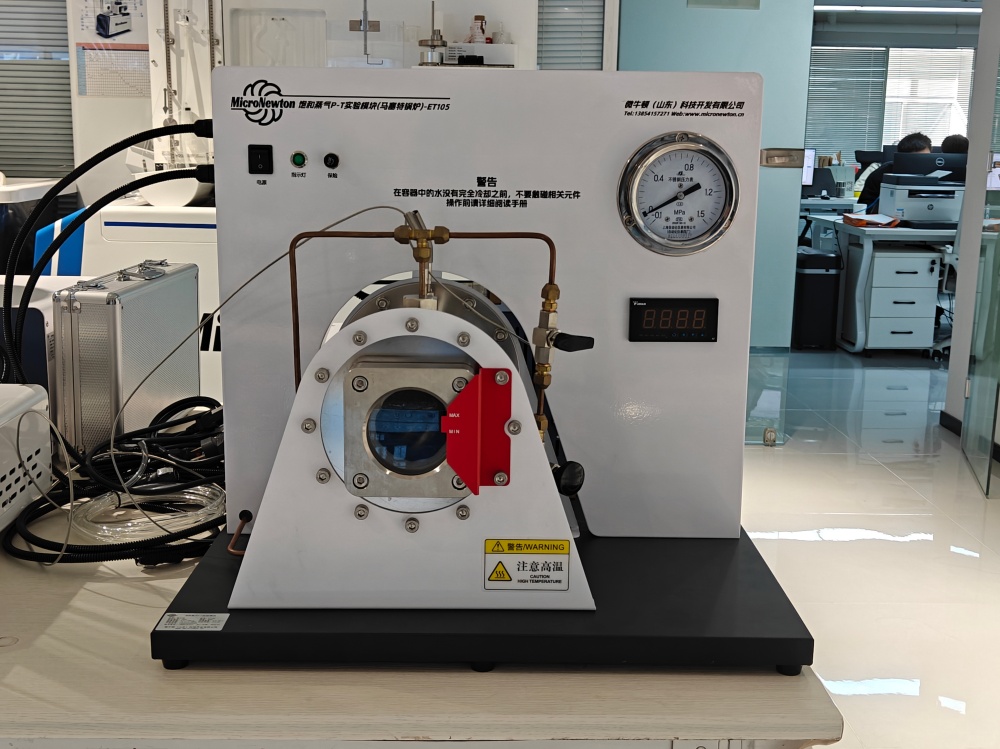
From an ideal gas the lab moves to a real one. A carbon dioxide module traps the gas in a glass capillary inside a controlled water bath. As temperature and pressure rise, the student watches the meniscus between liquid and vapor collapse until the two phases look identical. That moment is the critical point, and after seeing it once, the ideas of saturated liquid, saturated vapor, and real gas properties stop being definitions from a chapter.
Other modules fill out the picture. A constant pressure specific heat rig lets students measure how much heat raises the temperature of a flowing gas, and ties the result to wet air and relative humidity. An air adiabatic index module uses controlled expansion and heating to find the isentropic exponent, which connects back to engine cycles and compressor design. A small boiler with a sight glass shows boiling at different pressures and lets students plot the pressure temperature curve of saturated steam, where the Clapeyron relation finally has data behind it.
The endpoint of the sequence is usually the Rankine cycle. Students watch a boiler raise steam, drive a small turbine generator, pass the steam through a condenser, and return the condensate with a pump. They follow isentropic compression, isobaric heat addition, isentropic expansion, and isobaric condensation on a single live unit, reading temperature and pressure at every corner.
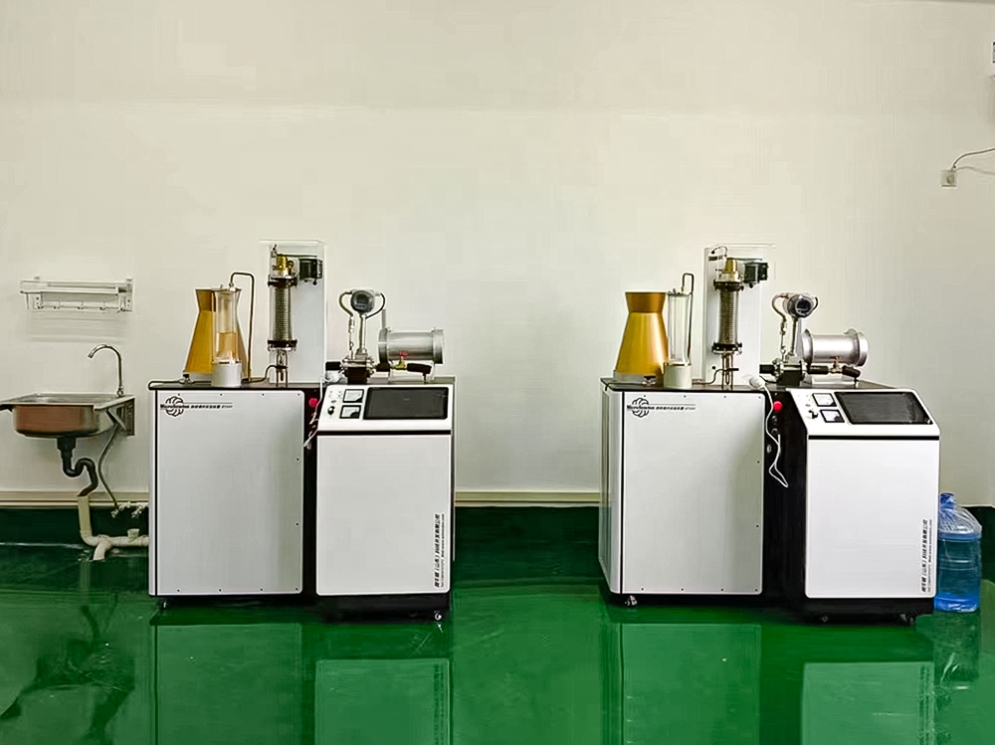
Because the host unit stores every reading and exports it as a spreadsheet, students can replot their curves later, compare their measured exponent or specific heat with the textbook value, and argue about where the difference came from. That conversation, about heat loss to the wall, about gauge uncertainty, about the moment the vapor first condenses, is where thermodynamics turns from a memorized list of processes into a working tool.
These experiments serve undergraduates in energy and power engineering, mechanical engineering, refrigeration and cryogenics, and vehicle engineering. Beyond the formulas, they build the habit of using thermometers, pressure gauges, and flow meters, of plotting curves from measured points, and of explaining why a result drifts from theory. A thermodynamics lab bench does not replace the lecture. It is where the lecture first becomes evidence.