Share:
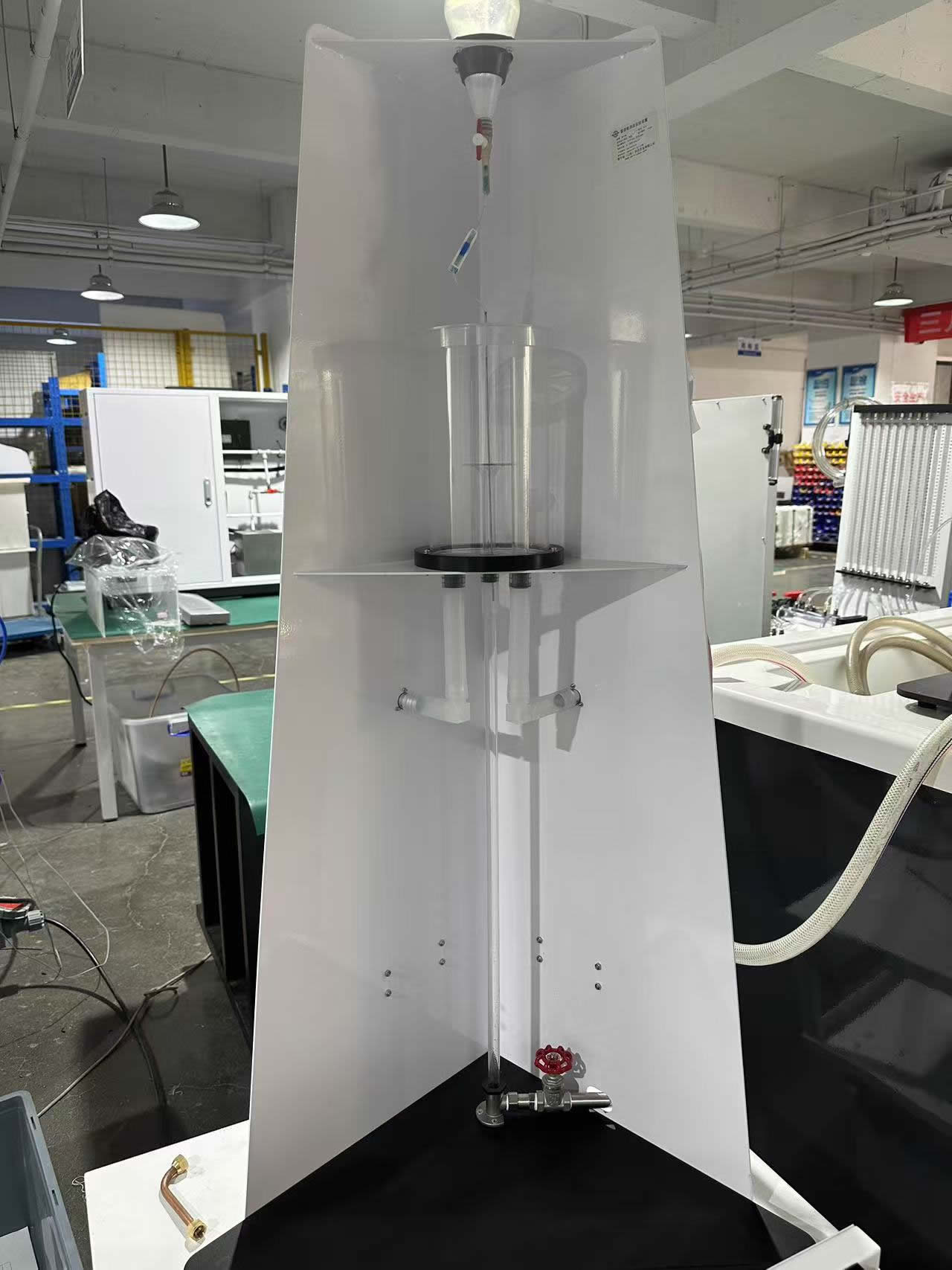
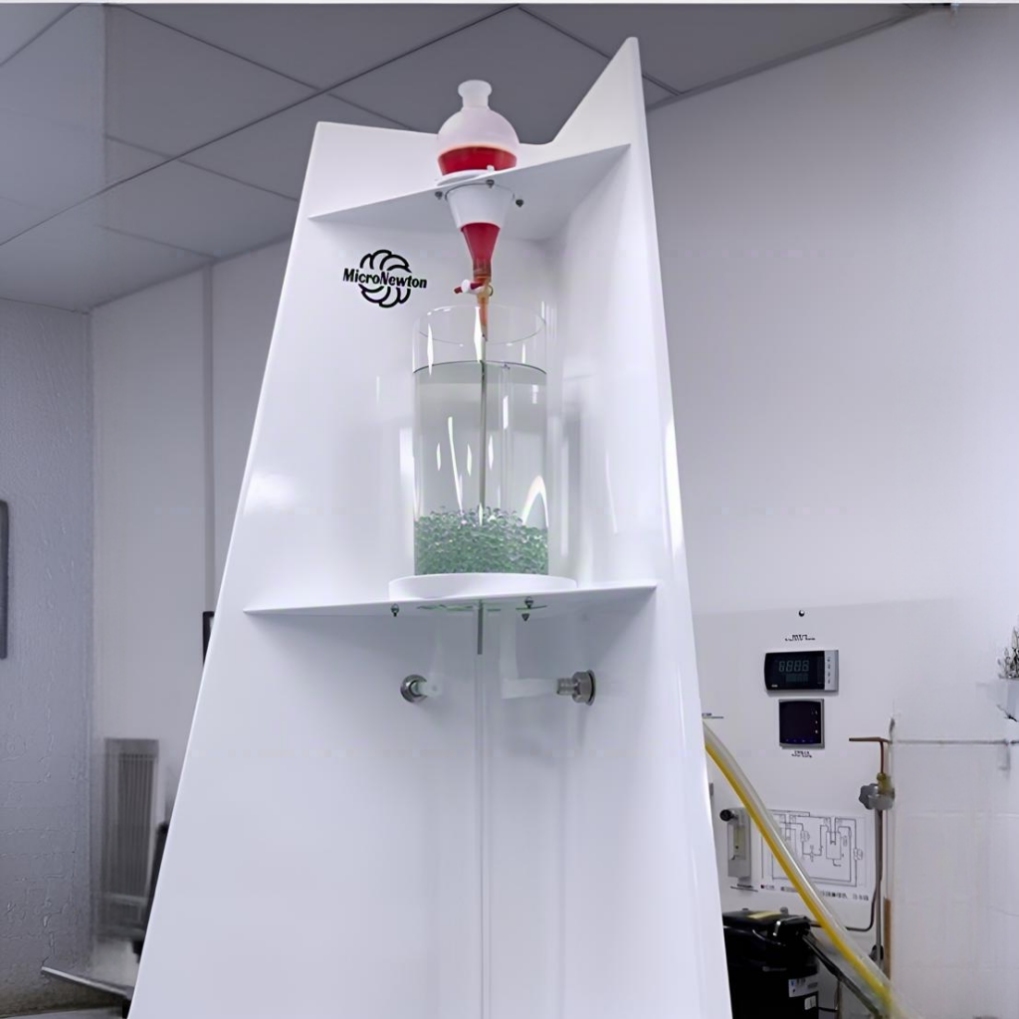
The Osborne Reynolds Apparatus (H102 Reynolds Number Experimental Device) is essential teaching grade fluid mechanics laboratory equipment for engineering education. It visualizes laminar flow, transitional flow and turbulent flow inside circular pipes, helping students understand the dimensionless Reynolds number and flow regime transition principle.
This benchtop Osborne Reynolds Apparatus works together with a basic hydraulics bench as part of our modular fluid mechanics lab system. It is widely adopted for mechanical engineering, civil engineering, energy power engineering and chemical engineering undergraduate coursework.
The Osborne Reynolds Apparatus replicates Osborne Reynolds’s classic pipe flow experiment. Using dye tracing visualization technology, it shows students how fluid transforms from ordered laminar flow through transitional status into chaotic turbulent flow by adjusting water flow velocity.
Reynolds number is the core dimensionless parameter. It describes the ratio between inertial force and viscous force of fluid:
Students record flow rate, water temperature and pipe dimension to calculate upper critical Reynolds number and lower critical Reynolds number, compare measured data with theoretical accepted values, and study how kinematic viscosity influences flow patterns.
Our H102 Osborne Reynolds Apparatus adopts full transparent visual design for teaching lab requirements.
Main Technical Specification
|
Parameter |
Specification |
|
Operating conditions |
Ambient temperature, atmospheric pressure |
|
Glass test tube diameter |
Inner diameter 12 mm, outer diameter 16 mm |
|
Flow range |
Adjustable according to flow regime |
|
Working medium |
Water (standard density 103kg/m3) |
|
Operating noise |
≤55dB |
|
Overall dimensions (L × W × H) |
550 × 550 × 1350 mm |
|
Base material |
Aluminum alloy |
|
Base dimensions |
810 × 392 × 510 mm |
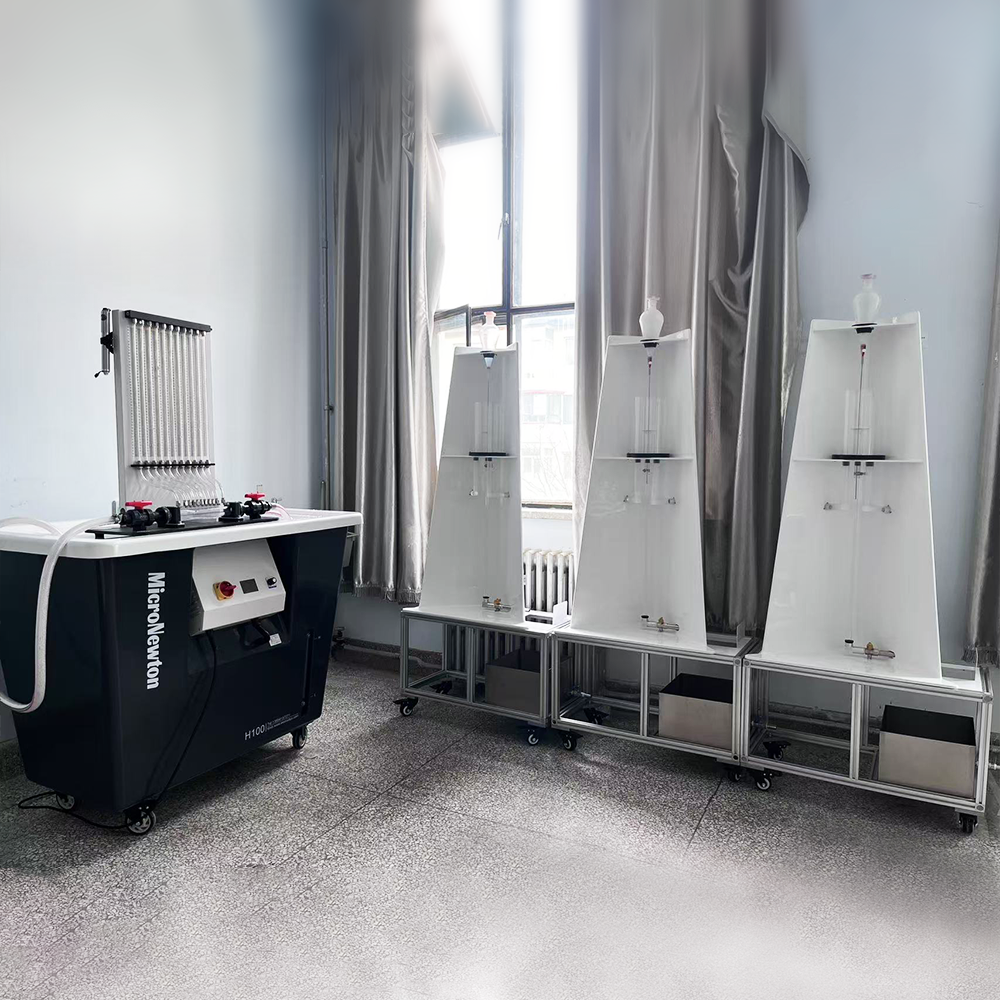
The Reynolds number experimental device supports classic fluid mechanics lab exercises for engineering majors:
Beyond fluid mechanics lab equipment, our manufacturing scope covers aerodynamics & wind tunnel systems, new energy and energy storage experimental benches, heat transfer apparatus, engineering thermodynamics teaching devices, refrigeration and airconditioning test rigs, material and structural mechanics experiment platforms.
Every lab apparatus passes strict factory pretest. We provide operation manuals, experiment instruction handbooks, on site commissioning and operator training for global educational customers. Whether you purchase a standalone Osborne Reynolds Apparatus or plan to set up a full scale fluid mechanics laboratory, our engineering team delivers custom made proposals matching your curriculum and lab site constraints.
Get Your Custom Lab Quotation
If you are sourcing Osborne Reynolds Apparatus or other Engineering Experimental Equipment for university teaching labs, please send your detailed requirements including target experiments, lab space and power supply condition. Our technical team will reply with product datasheet, technical proposal and commercial quotation.