Share:
A delegation from a Malaysian educational equipment firm recently toured MicroNewton’s facilities to evaluate engineering teaching lab solutions. Boasting long standing industry expertise and proven track record delivering large scale laboratory projects, the visiting team brought practical, project oriented perspectives. They sought a dependable supplier whose product portfolio satisfies immediate procurement demands as well as long term lab expansion roadmaps.
This visit was anchored by a shared objective: exploring how modular teaching hardware can cultivate the next generation of mechanical, aerospace and energy sector engineers.
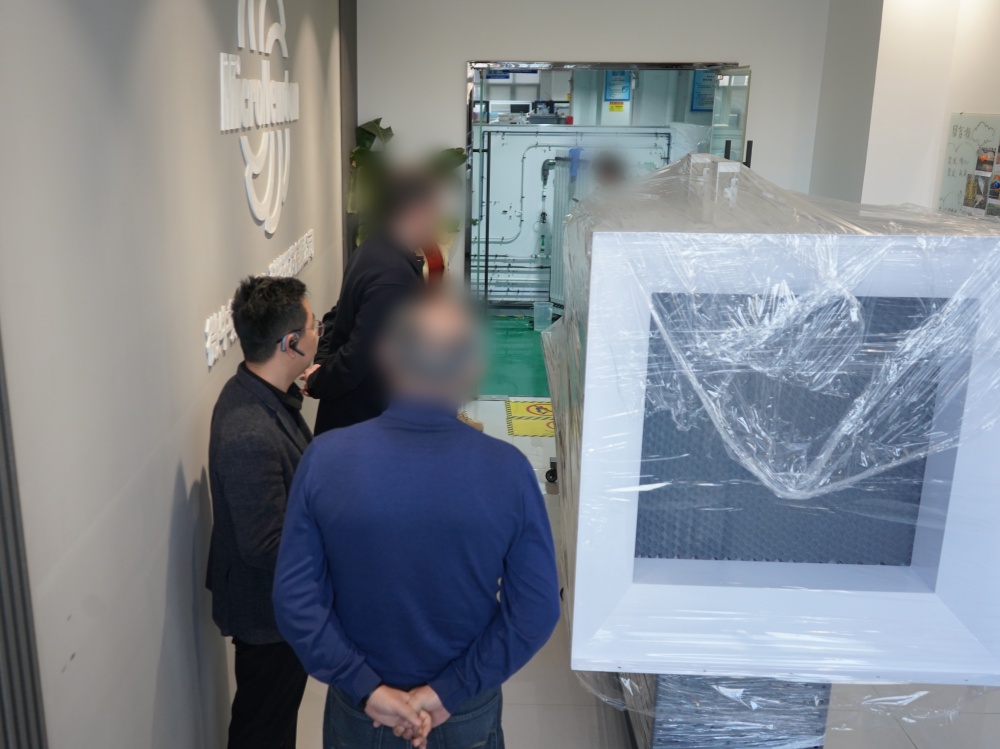
Our guests began with a guided tour of our product lines. The wind tunnel series immediately captured their attention, as they observed a subsonic wind tunnel running demonstrations of lift and drag measurement, flow visualization around airfoils, and boundary layer studies. They discussed how these wind tunnel experiments help aerospace and mechanical engineering students connect classroom aerodynamics theory with real measurement.
The tour continued through the fluid mechanics series, where students explore pipe flow, Bernoulli principles, hydraulic circuits, and flow measurement using modular experimental rigs. The guests noted how the same data acquisition philosophy appears across both the wind tunnel and fluid mechanics lines, giving students a consistent hands on experience.
The discussion then deepened considerably when the group reached the heat transfer series. Here, the modular base unit design was a key point of interest.
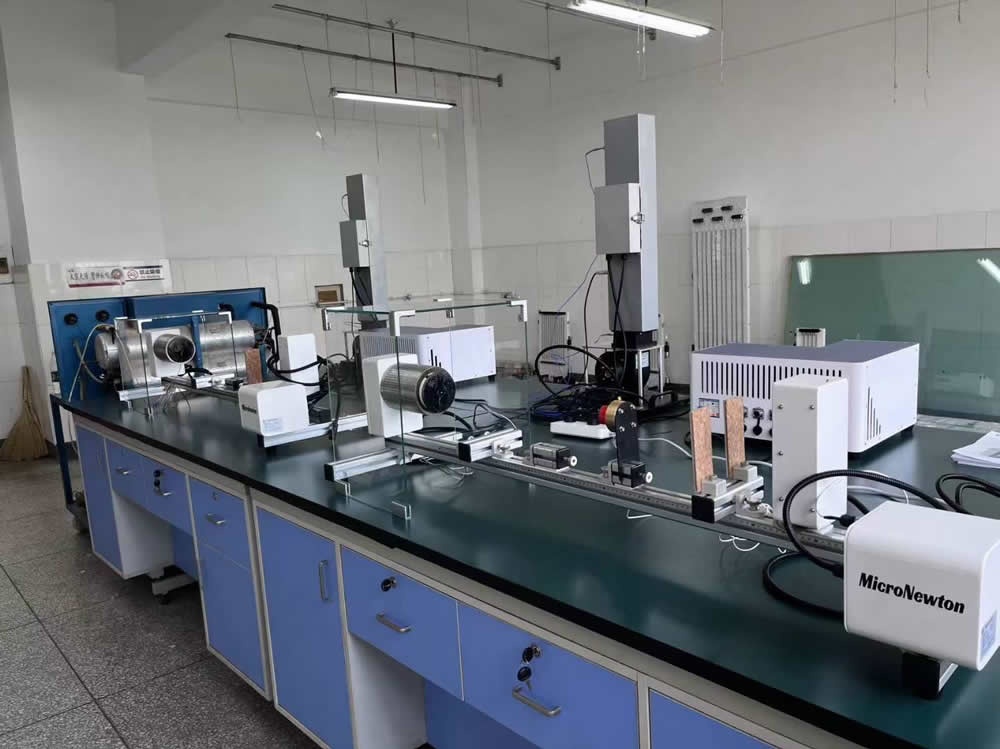
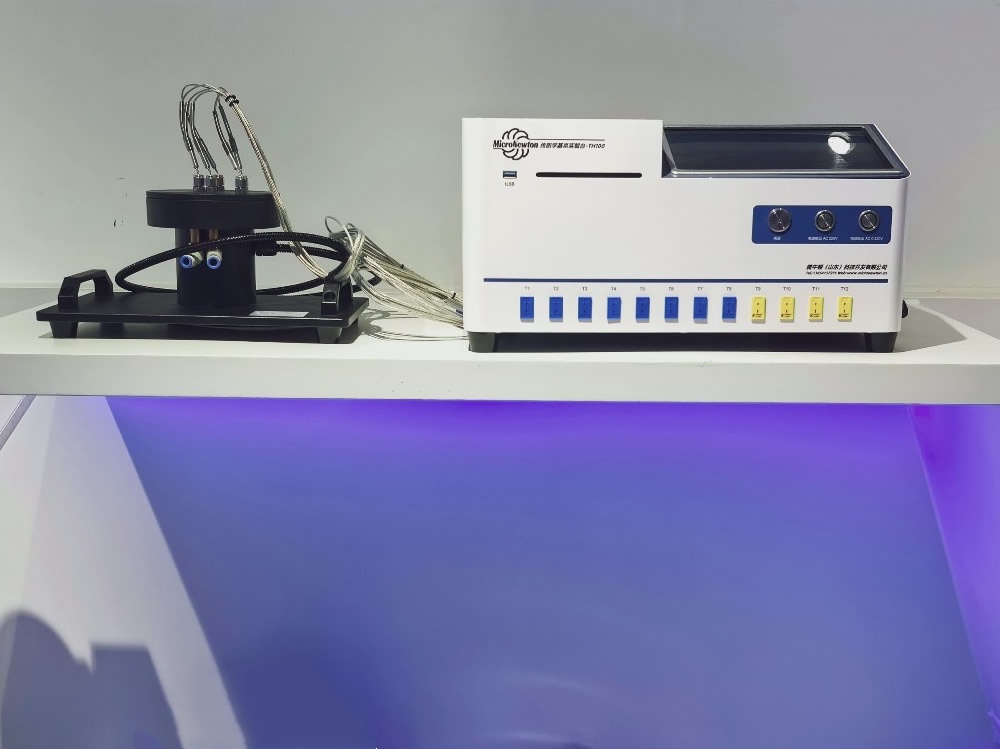
Because the visitors had strong interest in heat transfer products, we spent considerable time examining how the TH100 heat transfer base unit works as a shared platform. Every experiment module connects to this base, which provides power, temperature sensing, pressure and flow measurement, and a display screen for live data. Institutions can begin with a single module and add others as their curriculum expands, which aligns well with phased laboratory development.
We highlighted two modules in particular. The TH103 radiation heat transfer module lets students study thermal radiation between surfaces, measuring how emissivity, distance, and view angle affect heat flux. Students compare polished, gray, and matte black surfaces and verify the Stefan Boltzmann relationship through direct experiment.
The TH111 pool boiling heat transfer module drew attention as well. Students observe nucleate boiling and film boiling as heat flux increases, and they plot the boiling curve that maps wall superheat against heat transfer rate. This gives them hands on insight into phase change heat transfer, a topic that many textbooks describe but few teaching rigs demonstrate clearly.
Throughout the visit, the conversation kept returning to the students. Our Malaysian partner serves technical institutes and universities that train mechanical engineers, aerospace engineers, energy systems engineers, and applied science students. These students need to master the three modes of heat transfer, conduction convection and radiation, understand thermal conductivity measurement in solids liquids and gases, interpret boiling curves, and work with real data acquisition systems. The wind tunnel series adds aerodynamic measurement and flow visualization skills, while the fluid mechanics series builds competence in hydraulics and pipe flow analysis.
The modular structure means students progress from simple conduction experiments to convection, radiation, and finally phase change and heat exchanger studies, building a complete heat transfer skill set on one expanding platform.
The visit concluded with positive alignment on product fit and cooperation opportunities. Both sides see strong potential in supplying flexible, expandable engineering laboratories to institutions in Malaysia and the broader Southeast Asian market.
If you are an education equipment distributor or institution looking for wind tunnel, fluid mechanics, or heat transfer teaching solutions, contact MicroNewton to discuss your laboratory requirements.