Share:
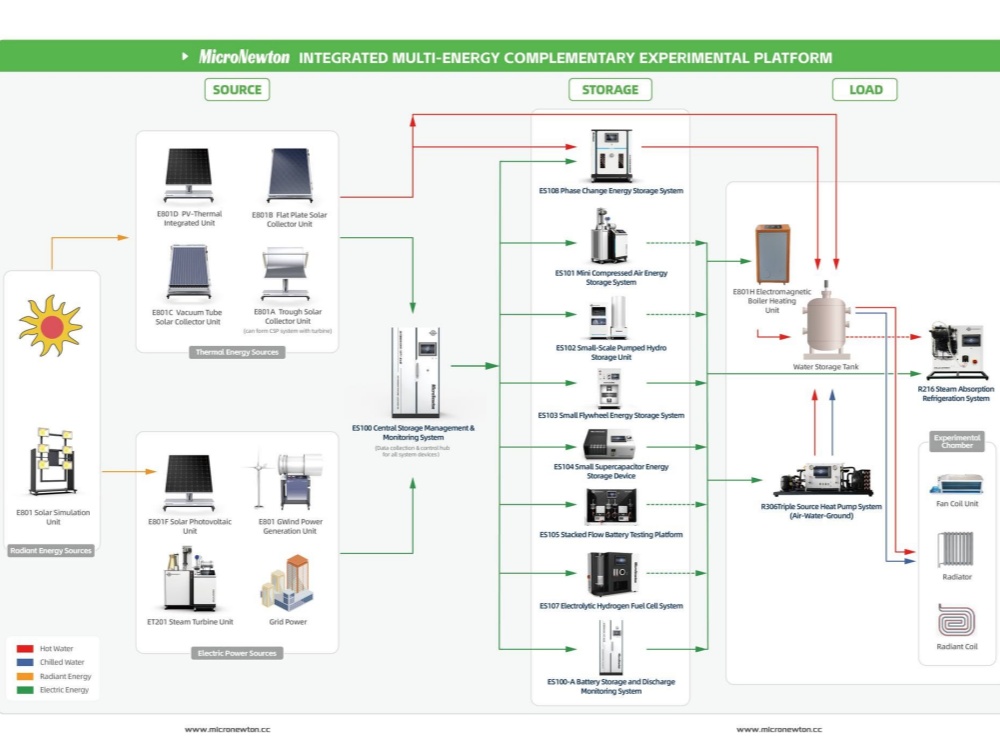
The Integrated Multi‑Energy Complementary Experimental Platform is a comprehensive teaching and research system built for new energy engineering education. It unifies renewable energy generation, energy storage modules, thermal power conversion and cooling loads within a single coordinated, observable testbed. Unlike standalone experimental units that examine only one energy process in isolation, this platform enables students to trace complete energy workflows from power generation through energy storage to end user consumption, replicating the operational logic of real world distributed energy systems.
The system adopts a source storage load architecture. Multiple energy sources feed power into a central management hub, which distributes electricity to various energy storage assemblies and then delivers power to practical thermal and electrical loads. This full end to end workflow helps learners build a holistic understanding of multi energy synergy mechanisms.
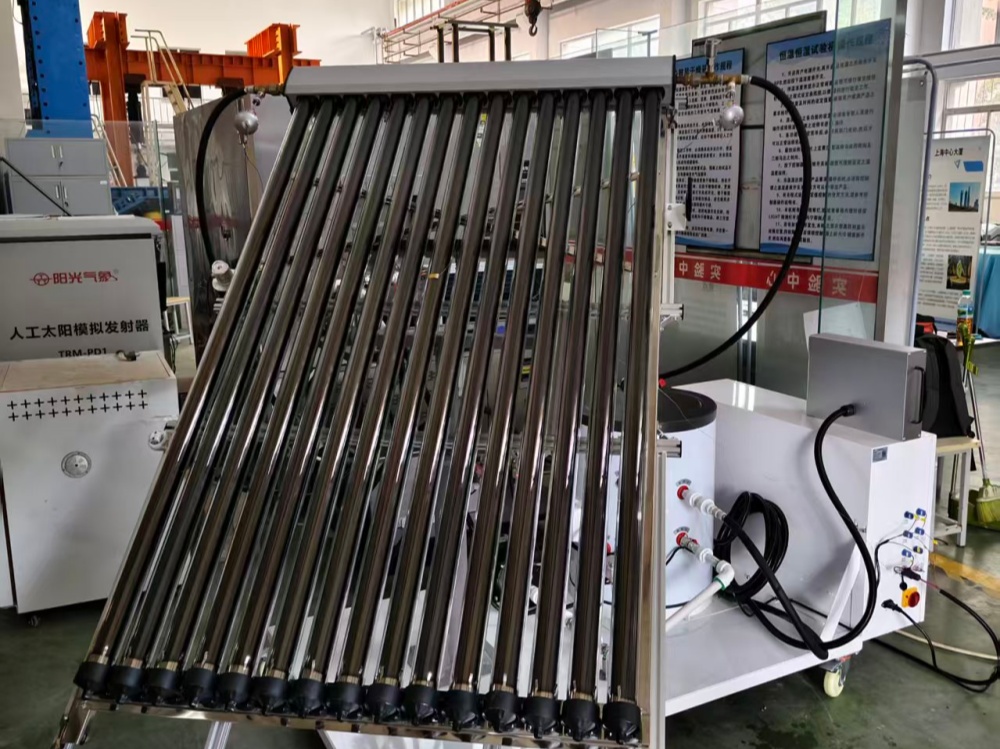
The energy workflow starts with a solar simulation unit fitted with more than six halogen lamps. It generates adjustable artificial solar irradiance ranging from 100 W/m² to 1100 W/m², eliminating restrictions caused by weather and natural daylight conditions. Lamp tilt angle can be adjusted between 0° and 45°.
Simulated irradiance acts on a monocrystalline silicon photovoltaic panel with rated output exceeding 550 W. This PV module contains a minimum of 132 cells and delivers efficiency above 23 percent. Students investigate the photovoltaic effect by capturing current and voltage characteristic curves, analysing how light intensity and temperature alter module performance, and conducting practical tests for maximum power point tracking algorithms.
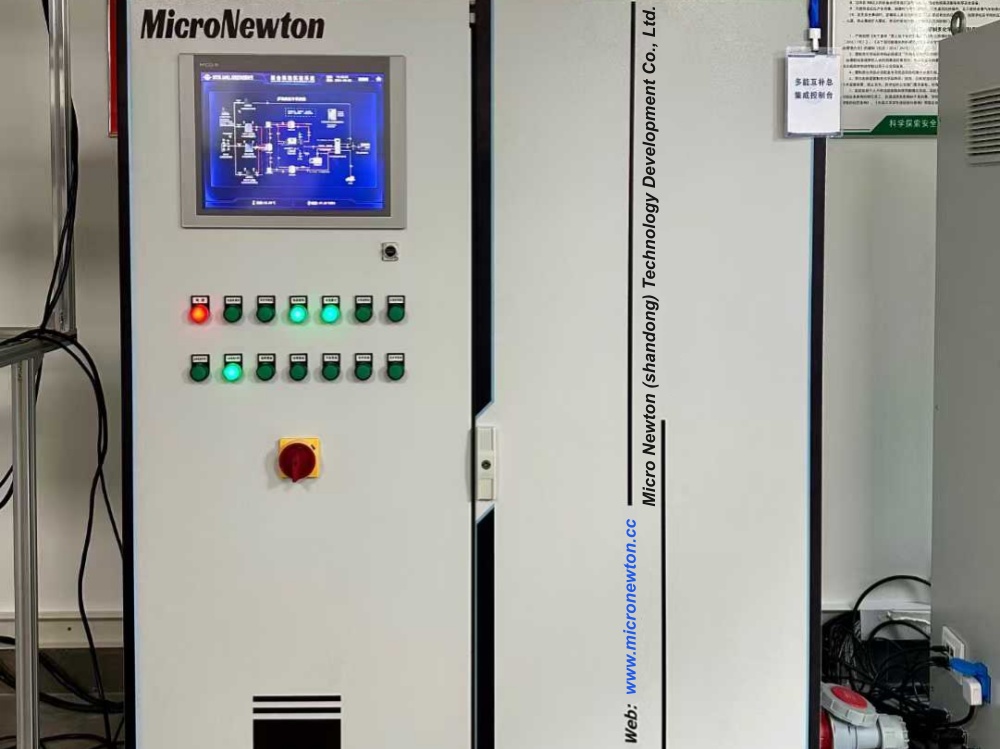
At the core of this experimental setup lies the central energy management and monitoring system. It gathers operational data from every connected device and regulates energy distribution across the whole platform, functioning as the unified data acquisition and control hub. It supports intelligent energy dispatch, live status monitoring, peak shaving simulation and battery state of charge estimation.
Connected to this control hub is a vanadium based stacked flow battery test platform. Learners evaluate charge and discharge round trip efficiency, compare performance among different proton exchange membrane samples, and study how electrolyte flow rate influences stack output characteristics.
The energy chain extends to a Rankine cycle steam turbine assembly to demonstrate thermal to mechanical to electric energy conversion. Operating with boiler pressure above 750 kPa and steam temperature exceeding 175 °C, the unit supports experimental study of isentropic compression, isobaric heat addition, isentropic expansion and isobaric condensation processes.
On the load side, a steam driven absorption refrigeration unit illustrates waste heat powered cooling principles. Students observe absorption, generation, condensation and evaporation phases, alongside quantitative measurement of the system's coefficient of performance.
Students majoring in new energy engineering, electrical engineering, energy storage engineering and building energy systems gain hands-on exposure covering the complete energy value chain. Core learning objectives include:
This experimental platform serves both undergraduate and postgraduate learners specialising in renewable energy, electrical engineering, energy storage engineering and thermal engineering. It also supports faculty led research projects targeting distributed energy systems and renewable energy integration scenarios.
By consolidating solar PV generation, vanadium flow battery storage, Rankine cycle steam turbine power generation and absorption cooling onto one controllable experimental testbed, the Multi Energy Complementary Experimental Platform delivers hands-on practical training tailored for the fast expanding renewable energy and smart grid industry sectors.
Explore MicroNewton multi energy complementary experimental platform and renewable energy teaching equipment. Contact us to design a laboratory solution for your institution.