Share:
Heat exchangers sit at the heart of almost every thermal system. They recover waste heat in power plants, condition air in buildings, cool engines, and keep refrigeration cycles running. Because they are so common, heat transfer courses spend a large part of the term on them, yet textbooks alone rarely explain why two exchangers of the same size can perform so differently. A teaching laboratory exists to close that gap.
In a modern heat transfer lab, students stop reading equations about heat exchange and start running them. On a bench top heat exchanger unit they set two fluid loops in motion, one hot and one cold, and watch how heat moves across a metal wall from the warmer stream to the cooler one. The goal is not simply to confirm a number from a chart, but to feel how inlet temperature, flow rate, and flow arrangement change the result.
The core knowledge they build is the language of recuperative heat transfer. They learn to read inlet and outlet temperatures on both sides, calculate heat duty from the energy balance of each stream, and estimate the overall heat transfer coefficient that links heat duty to temperature difference. They practice the log mean temperature difference method, because the driving force between the two streams is not constant along the exchanger and cannot be guessed from a single point.
A useful teaching bench also lets them compare the two classic arrangements side by side. They switch the piping so the hot and cold streams travel in the same direction as parallel flow, then reverse it to counter flow, and see for themselves why counter flow recovers more heat for the same area. They vary flow rate step by step and plot how the heat transfer coefficient and pressure rise together, which teaches the tradeoff between better heat exchange and the cost of pumping.
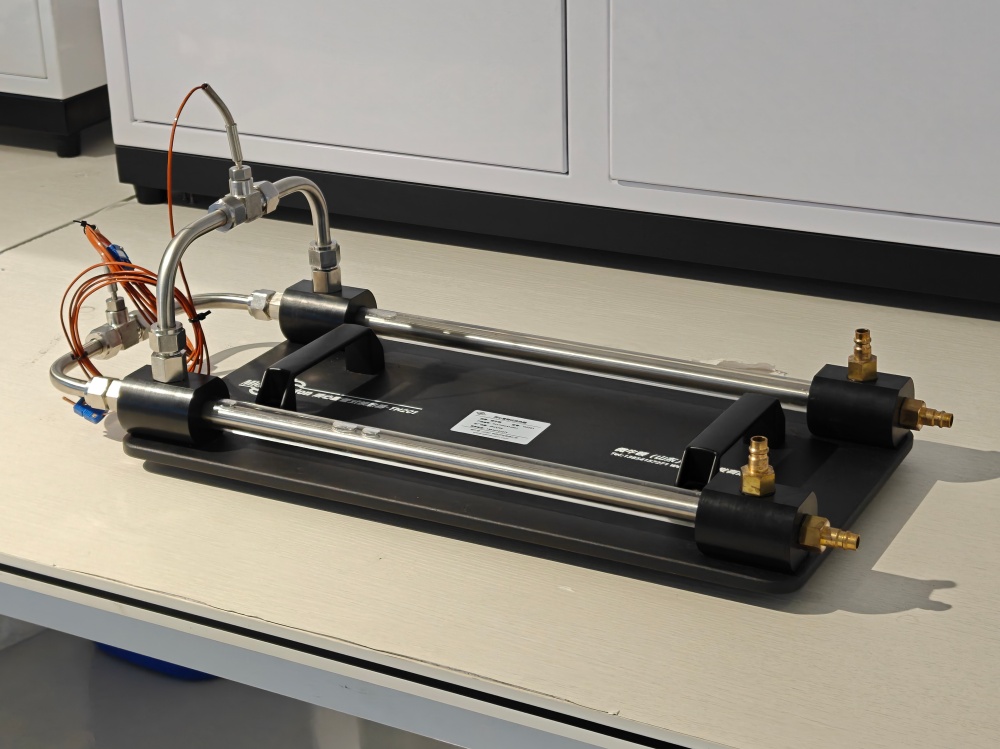
What makes a modular lab bench valuable is that the student can change the exchanger itself rather than the numbers. A concentric double pipe module, a plate module, a shell and tube module, a jacketed vessel, and a water to air finned tube module all connect to the same hot and cold water skid. Each one shows a different compromise between compactness, heat transfer rate, pressure drop, and ease of cleaning. The transparent double pipe makes the annular gap visible, so students can point to where the two streams pass. The plate module shows how closely spaced corrugated sheets pack a large area into a small frame. The finned water to air unit explains why radiators and condensers need extended surfaces on the gas side, where heat transfer is naturally weaker.
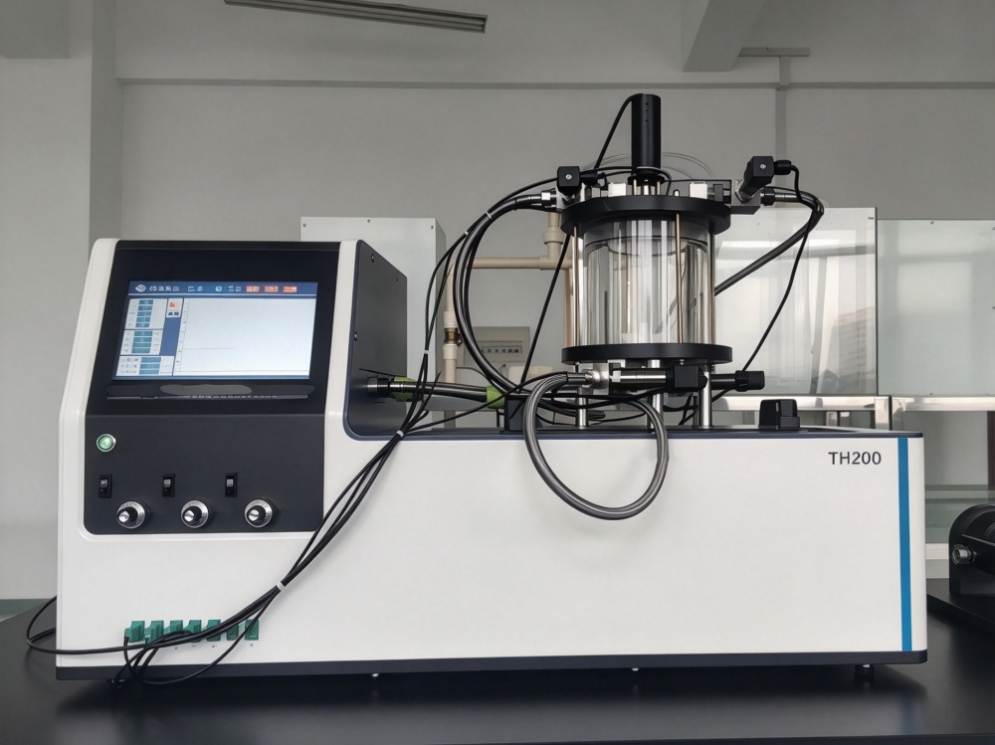
A touch screen data acquisition terminal records the temperatures, flow rates, and pressure differences at every stage and can export the dataset by USB. Students then turn an afternoon of measurement into plots of heat transfer coefficient against flow rate, and of efficiency against flow arrangement. That habit of measurement, calculation, and comparison is exactly what employers in energy, power, HVAC, and process engineering expect from new graduates.
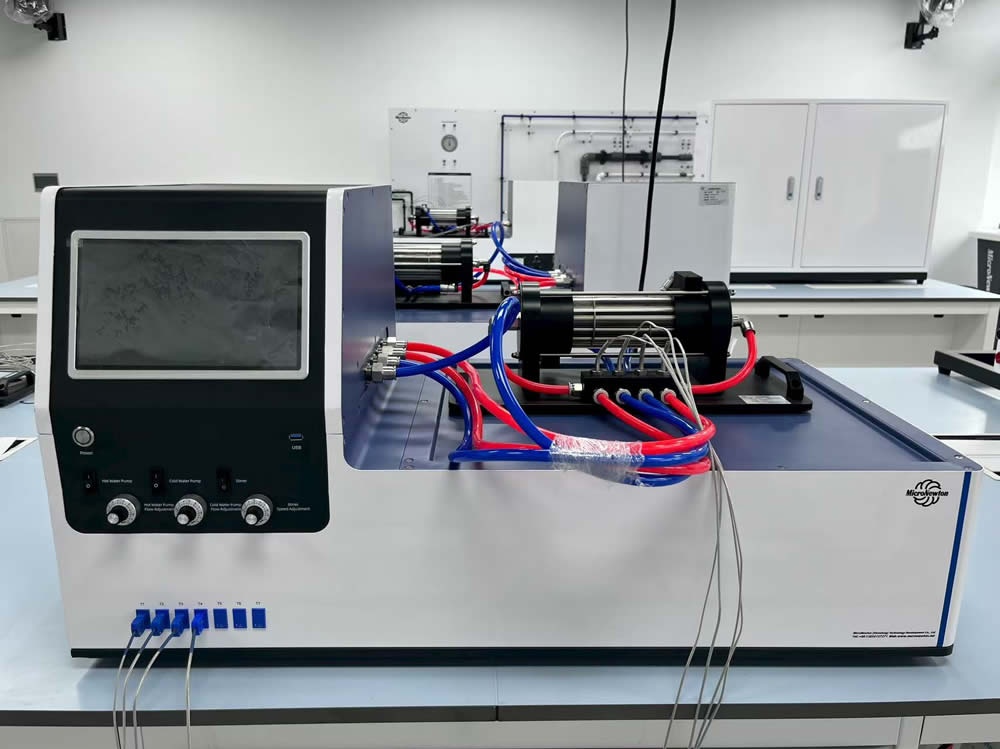
These experiments serve undergraduates in energy and power engineering, new energy science, civil engineering, and building environment programs. They connect engineering thermodynamics, heat transfer, and refrigeration into one measurable story. A teaching heat exchanger bench is not a small version of an industrial machine. It is a place where abstract heat transfer theory becomes a number a student has measured and trusts.