Share:
1. Abstract
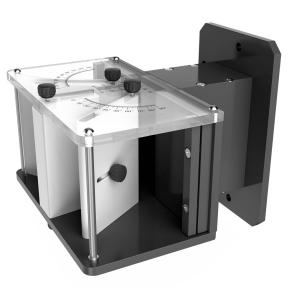
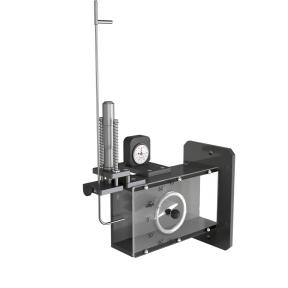
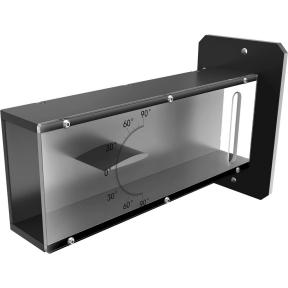
Aerodynamic experimental equipment serves as a core teaching platform for majors including aerospace engineering, mechanical engineering, and energy and power engineering in universities. Through a series of standardized experiments covering Bernoulli’s principle, flat plate boundary layer, airfoil pressure distribution, pipe turbulence, square bend flow, Coanda effect, drag force analysis and flow visualization, students can intuitively grasp the laws of air flow and master the measurement and analysis methods of key parameters such as pressure, flow velocity, drag force and flow field morphology.
The F100 basic aerodynamic test bench features a modular structure, enabling flexible configuration of diverse experimental units to support integrated teaching of aerodynamic theories, typical flow phenomena and engineering testing techniques.
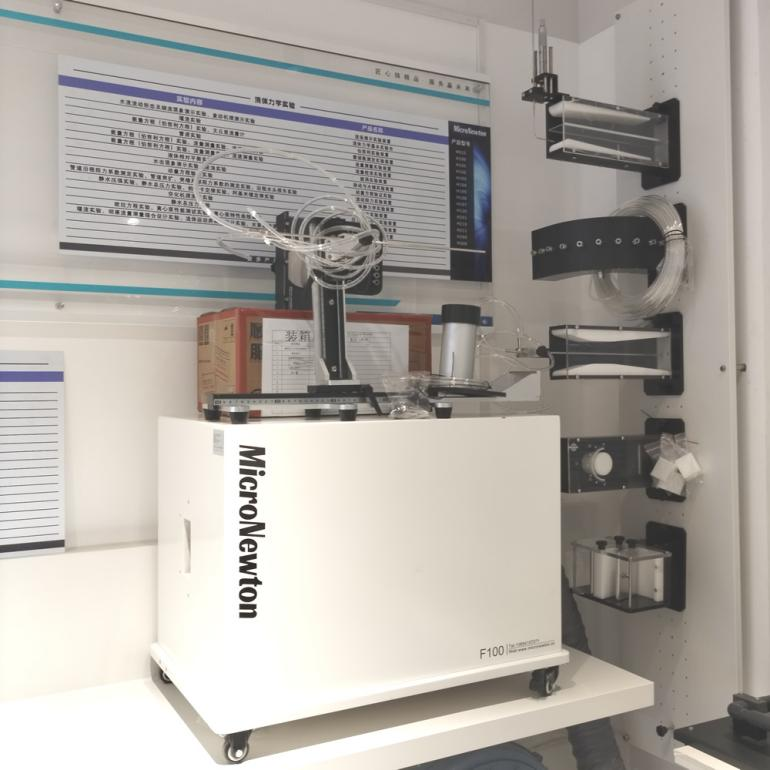
2. Overview of Basic Aerodynamic Experiment Modules
2.1 Definition
Basic aerodynamic experiment modules are modular experimental devices designed for fundamental aerodynamics teaching.
Matched with a basic aerodynamic test bench, they rely on a primary wind source platform to generate stable and adjustable airflow, and realize multiple experimental functions including pressure measurement, flow velocity analysis, flow around observation, drag testing and flow field visualization via different functional modules.
Compared with single-function experimental devices, these modular units feature flexible combination, comprehensive experimental coverage and targeted teaching performance.
Instructors can select customized modules according to teaching schedules, helping students correlate theoretical formulas, experimental phenomena and practical engineering applications through observation of diverse airflow behaviors.
2.2 Structural Composition
The system consists of a basic wind source platform and multiple functional experiment modules. The wind source platform undertakes mainstream air output, flow rectification and air volume regulation, while independent functional modules are responsible for professional experiments in pressure testing, flow display, drag analysis and boundary layer research respectively.
2.3 Working Principle
The wind source platform generates steady airflow, which is stabilized and accelerated through a plenum chamber before being delivered to each functional module.
When airflow passes through structures such as airfoils, flat plates, pipes and curved surfaces, typical aerodynamic phenomena occur, including pressure and velocity variation, boundary layer development, turbulence disturbance, flow separation, Coanda effect and flow drag.
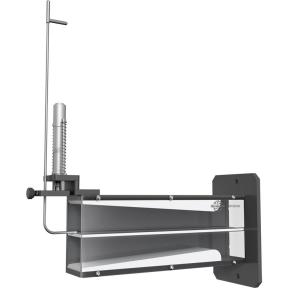
During experiments, multi-tube manometers, pressure taps, drag force measuring structures and smoke tracing visualization windows are adopted to monitor airflow conditions. Theoretical aerodynamic principles can be fully verified through experimental data collection and processing.
3. Core Experimental Projects
The modular system supports multiple mainstream aerodynamic teaching experiments, with detailed teaching objectives and test contents as follows:
|
Experimental Project |
Product Images |
Teaching Objectives |
Measurable & Observable Parameters |
|
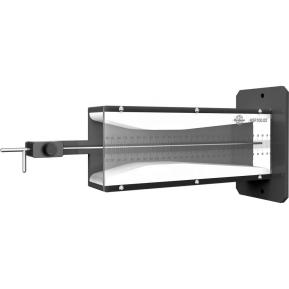
Bernoulli’s Principle Experiment |
|
Understand the conversion relationship between pressure energy and kinetic energy in airflow and verify Bernoulli’s equation |
Static pressure, total pressure, flow velocity |
|
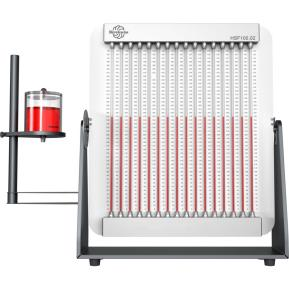
Multi-point Pressure Measurement Experiment |
|
Master multi-point pressure measurement techniques and grasp the law of pressure variation along flow paths |
Multi-channel pressure values, pressure distribution characteristics |
|
Flat Plate Boundary Layer Experiment |
|
Explore the formation and development mechanism of boundary layer in flat plate airflow |
Boundary layer thickness, velocity distribution, surface roughness influence |
|
Airfoil Pressure Distribution Experiment |
|
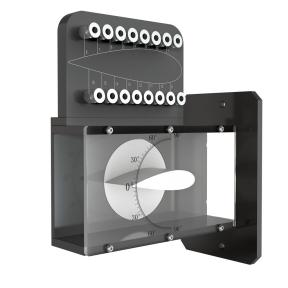
Understand airfoil flow-around characteristics and lift generation mechanism |
Airfoil surface pressure distribution, pressure difference between upper and lower surfaces |
|
Pipe Turbulence Experiment |
|
Observe internal pipe airflow states and comprehend turbulence characteristics |
Internal pipe flow regime, pressure variation, turbulence phenomena |
|
Square Bend Flow Experiment |
|
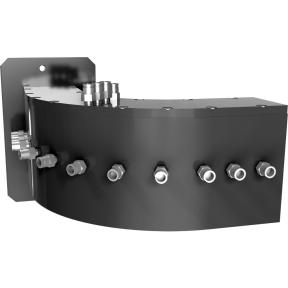
Analyze airflow variation and local resistance loss in curved flow channels |
Internal bend flow state, local drag coefficient, pressure fluctuation |
|
Coanda Effect Experiment |
|
Grasp the principle of airflow attachment to curved surfaces (Coanda effect) |
Airflow deflection, wall-attached flow, streamline distribution |
|
Drag Force Analysis Experiment |
|
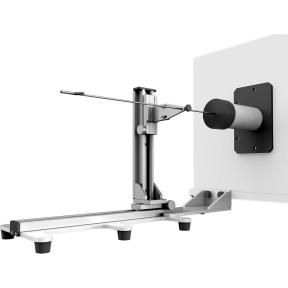
Master measurement and analysis methods of flow-around drag for different models |
Drag force, model drag variation, flow-around characteristics |
|
Flow Visualization Experiment |
|
Intuitively observe airflow paths, flow separation and vortex structures |
Flow lines, vortex distribution, flow separation and recirculation zone |
|
Smoke Tracing Experiment |
|
Visualize airflow trajectories via smoke tracing to enhance experimental intuition |
Smoke flow lines, flow field morphology, dynamic flow variation |
4. Technical Specifications
The core technical parameters of the basic aerodynamic experimental system are listed below:
|
Parameter Item |
Technical Specifications |
|
Wind Speed Range |
0–30 m/s (continuously adjustable) |
|
Rated Power |
1.5 kW |
|
Rated Voltage |
Three-phase 220 V |
|
Air Volume |
120 m³/h |
|
Rated Pressure |
2 kPa |
|
Air Outlet Area |
≤0.005 m² |
|
Flow Field Optimization Unit |
High-precision multi-layer composite turbulence suppression matrix |
|
Flow Field Non-uniformity |
≤2% |
|
Plenum Chamber Size |
≤600 × 400 × 400 mm |
|
Hot-wire Anemometer Range |
0–30 m/s |
|
Hot-wire Anemometer Resolution |
0.1 m/s |
|
Hot-wire Anemometer Accuracy |
±2% |
|
Working Power Supply |
Single-phase two-wire, 220 V±5%, 50 Hz |
5. Applicable Majors & Courses
5.1 Applicable Academic Majors
5.2 Applicable Academic Courses
6. Product Advantages
6.1 Modular Configuration with Full Experimental Coverage
Adopting a highly flexible modular design, the system supports customized combination of experimental units based on teaching requirements. It covers all core aerodynamic experimental items including theoretical verification, flow phenomenon observation and engineering parameter testing, forming a systematic and comprehensive experimental teaching platform for aerodynamics courses.
6.2 Intuitive Experimental Phenomena for Theoretical Comprehension
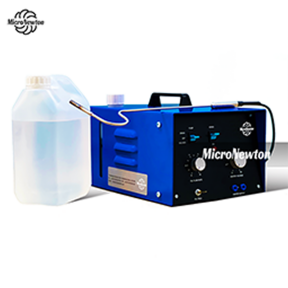
Air flow characteristics are abstract in theoretical teaching. Equipped with smoke generators, transparent experimental structures and visualization windows, the device enables students to directly observe streamlines, vortices, flow separation and wall-attached flow, effectively bridging the gap between abstract theories and intuitive physical phenomena.
6.3 Multi-parameter Precision Measurement Capability
The system supports integrated testing of multi-point pressure distribution, boundary layer velocity, airfoil differential pressure and flow-around drag force. It enables students to complete full-process experimental training including phenomenon observation, data acquisition, numerical analysis and conclusion summarization, improving their comprehensive engineering experimental literacy.
6.4 Adaptive to Multi-level Teaching Scenarios
The device meets the teaching demands of undergraduate students at different grades. It can serve as a demonstration tool for freshmen and sophomores to understand basic aerodynamic laws, and provide professional experimental training for juniors and seniors in data processing and flow characteristic analysis.
6.5 Flexible Expansion for Laboratory Construction
The system supports phased construction of university laboratories. Users can first deploy the basic wind source platform, and gradually add functional modules according to curriculum updates and teaching expansion demands. It features strong scalability and long-term application value for laboratory upgrading and construction.
7. Frequently Asked Questions (FAQ)
Q1: What teaching contents can the basic aerodynamic experiment modules support?
A1: It is mainly applied to undergraduate teaching of aerodynamics and fluid mechanics, supporting classic experiments such as Bernoulli’s principle verification, boundary layer research, airfoil pressure testing, pipe and bend flow analysis, Coanda effect demonstration, drag force measurement and full flow field visualization.
Q2: Is the module compatible with independent use?
A2: No. All functional modules need to be matched with a dedicated basic aerodynamic test bench. The test bench provides stable airflow output and wind speed regulation, while the independent modules complete targeted experimental testing and observation.
Q3: What types of university laboratories is the device suitable for?
A3: It is applicable to professional laboratories of aerospace engineering, mechanical engineering, energy and power engineering, and public teaching platforms including fluid mechanics laboratories, aerodynamics teaching laboratories and engineering training centers.
Q4: What core abilities can students cultivate through the experimental system?
A4: Students can master professional skills including aerodynamic flow observation, pressure and velocity testing, drag force analysis and boundary layer research. Meanwhile, their capabilities of experimental data processing, engineering analysis and scientific summary can be significantly improved.
Q5: What are the core competitive advantages of the product?
A5: The product integrates modular flexible configuration, comprehensive experimental coverage, intuitive flow visualization, multi-parameter precise testing and multi-scenario teaching adaptation. It is a cost-effective and scalable professional experimental solution for university aerodynamics teaching and laboratory construction.
8. Enterprise Profile
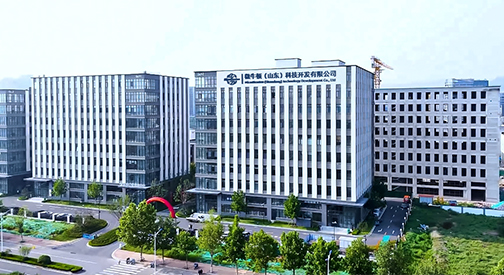
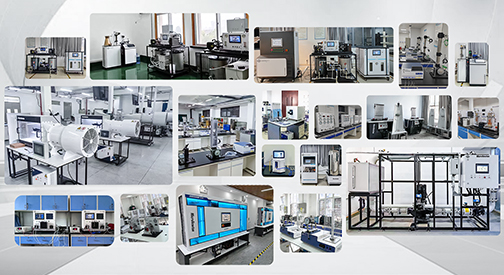
MicroNewton (Shandong) Technology Development Co., Ltd. focuses on the R&D and manufacturing of engineering teaching and scientific research experimental equipment. Our product lineup covers aerodynamics, heat transfer, engineering thermodynamics, fluid mechanics, energy and environment, and energy storage series.
We provide one-stop services including customized equipment development, overall laboratory scheme design, complete teaching material supporting and lifelong technical after-sales service. Committed to building standardized, syllabus-aligned and easy-maintenance training laboratories for undergraduate universities, we fully meet the demands of higher education experimental teaching and scientific research.