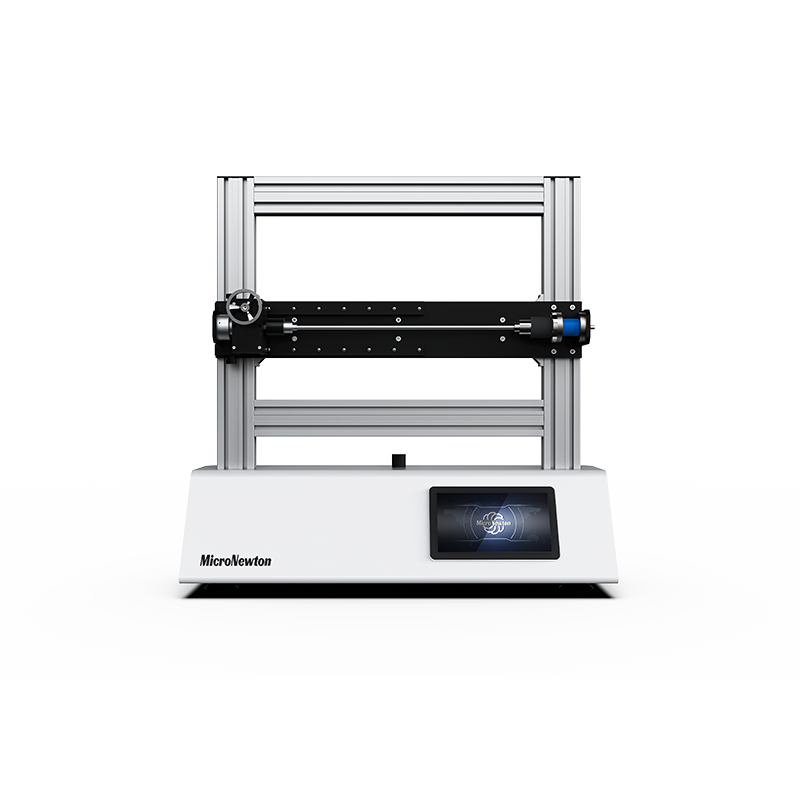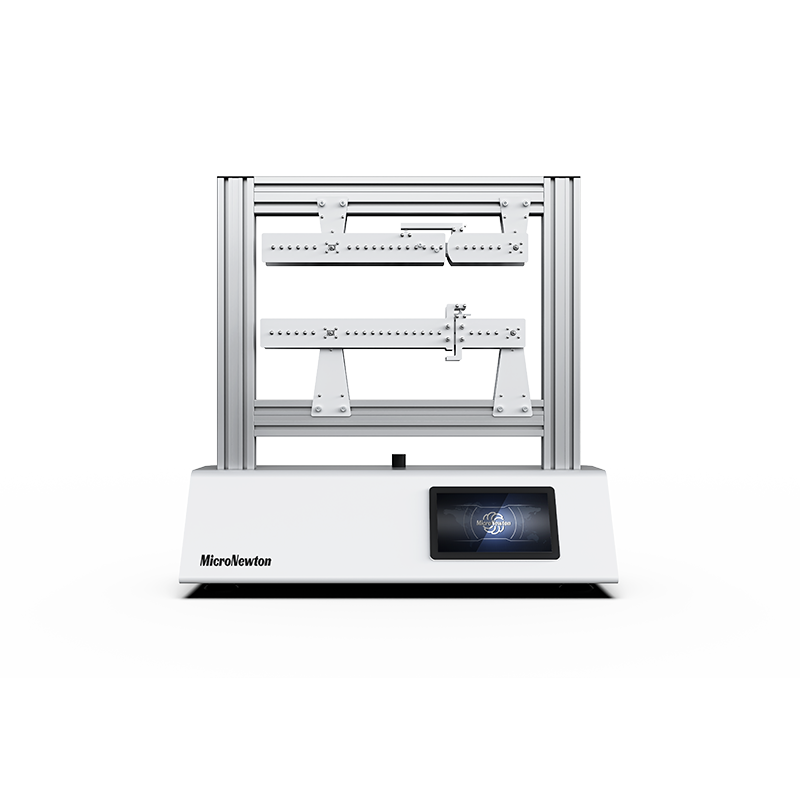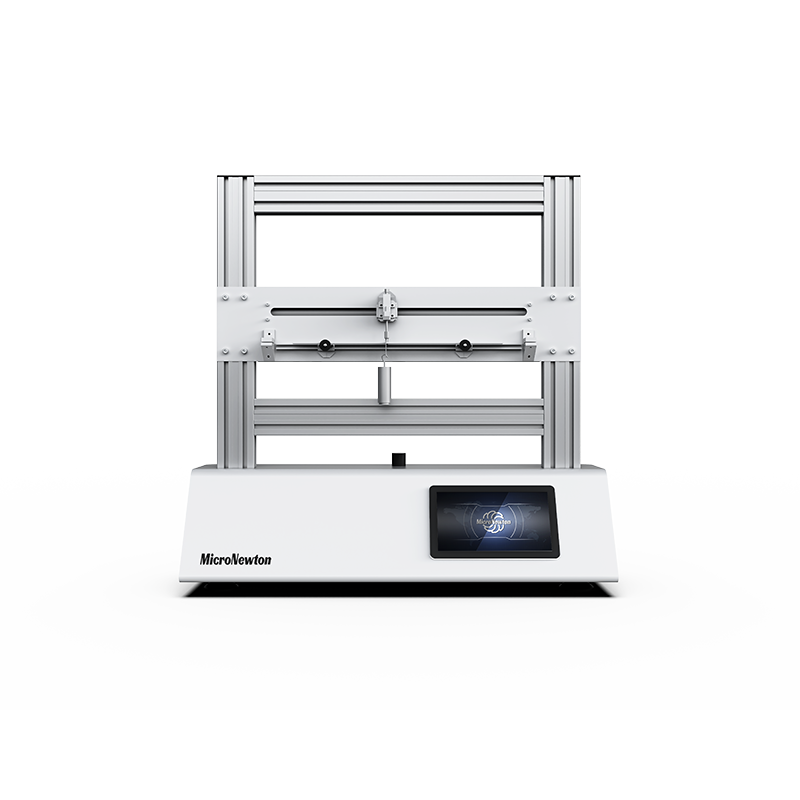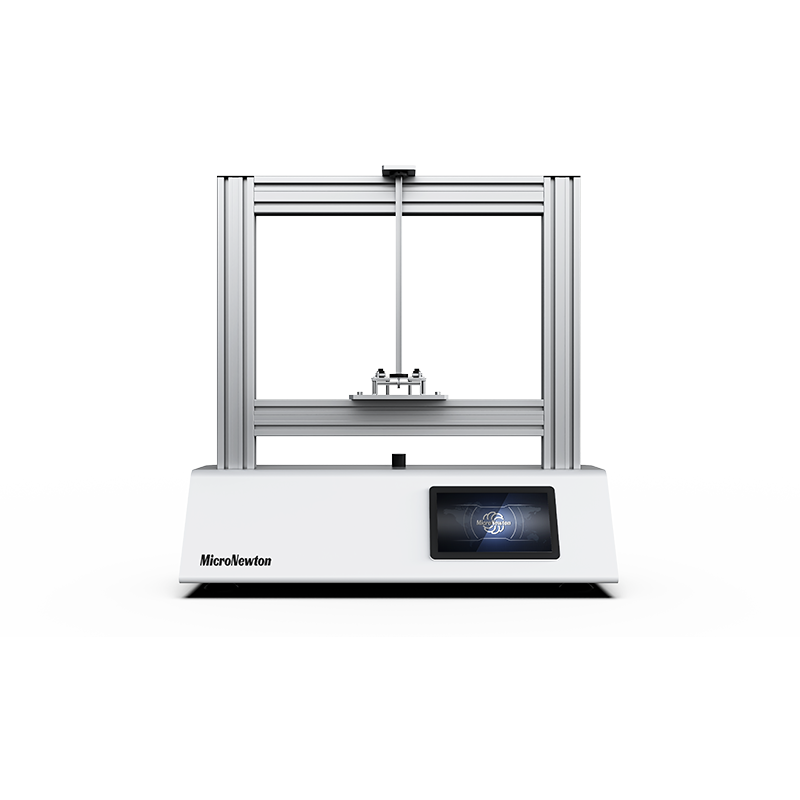
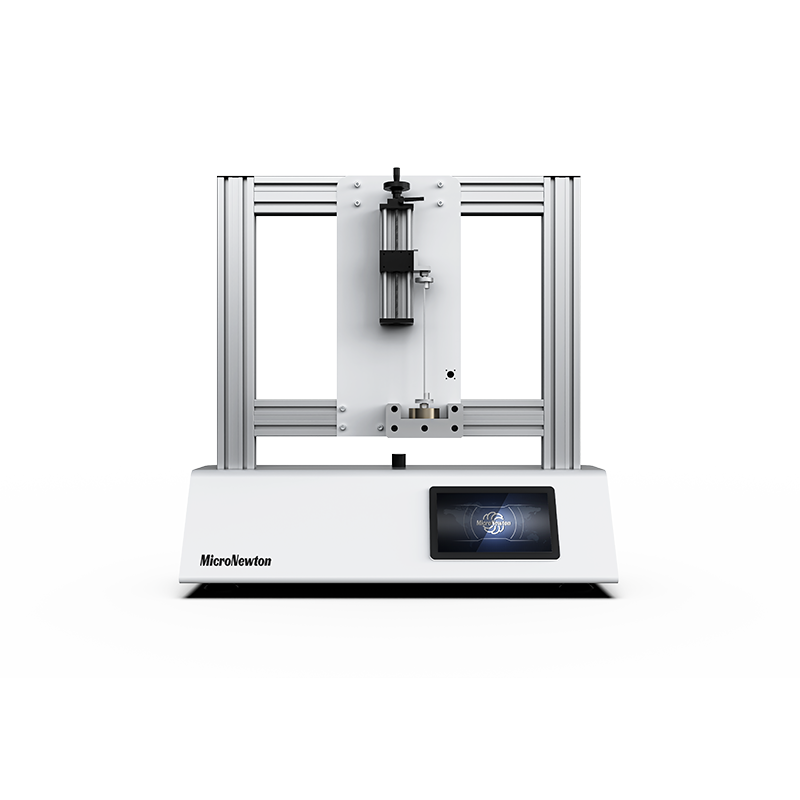
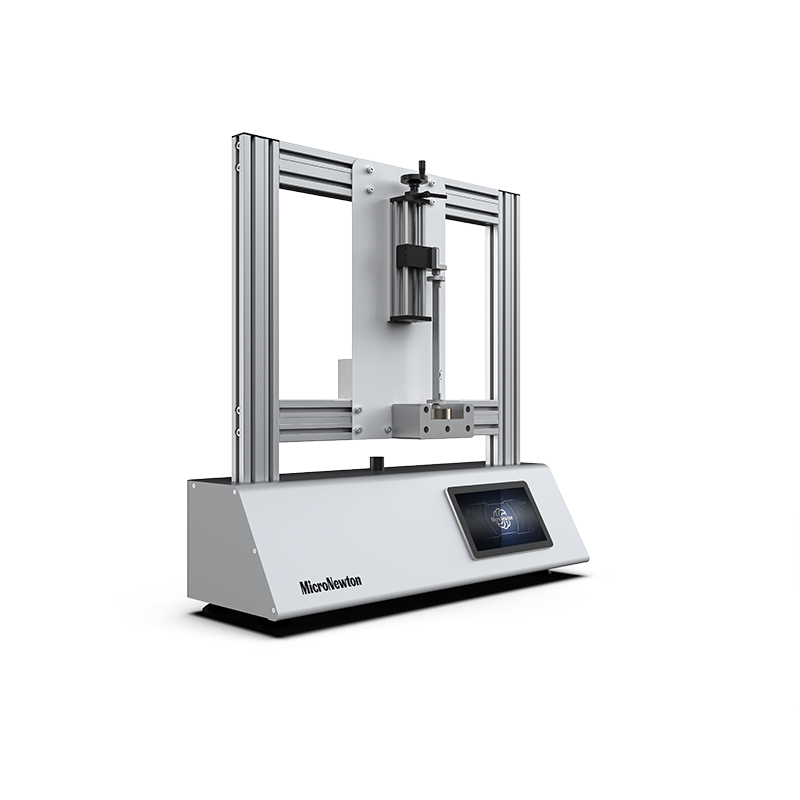
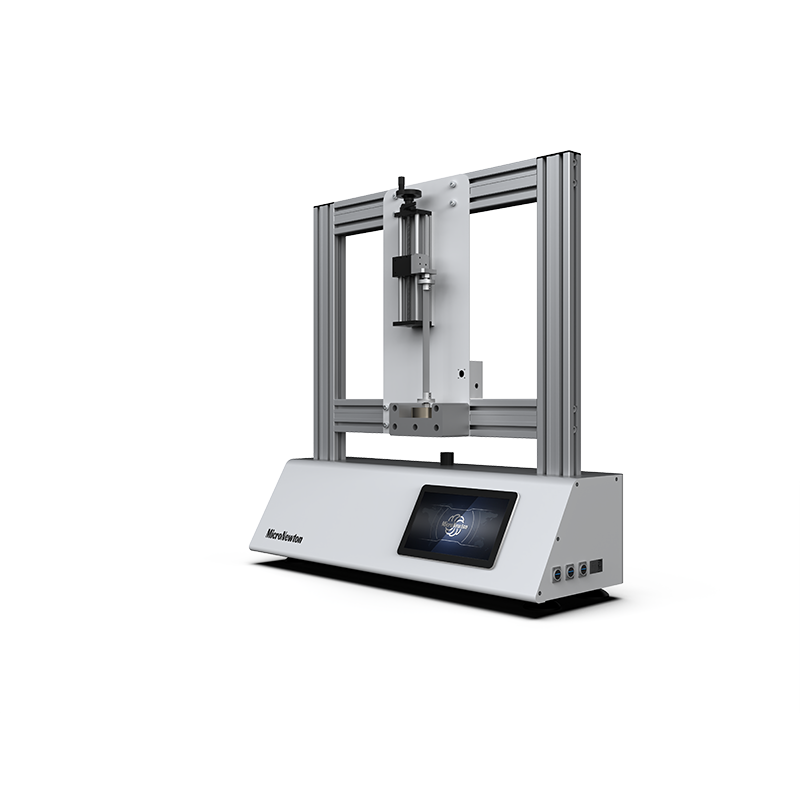
The MS02 axial tension compression rod internal force testing experimental device is a specialized teaching instrument used in material mechanics to deeply study the distribution law of internal forces in rods. This device utilizes a multi-channel strain measurement system, which not only focuses on the overall stress, but also emphasizes high-precision quantitative analysis of the local stress/strain distribution non-uniformity near the load application point and the section mutation. As an ideal platform for verifying the Saint Venant principle, it can intuitively demonstrate the attenuation process of the "end effect" and the mechanism of stress concentration, thereby revealing the applicability and limitations of the "plane hypothesis" in theoretical mechanics. By equipping various specialized specimens (such as perforated, notched,orvariablecrosssectionrods)andeccentricloadingmechanisms,thisdeviceisusedtoverifythesuperpositionprinciple,measuretheelasticmodulusandPoisson'sratioofmaterials,andexplorethe neutral axis migration law under eccentric tension and compression. It is a core teachingequipment for cultivating students' micro stress analysis ability and engineering safety awareness.
Share:
Added to cart successfully
Experimental feature
1.Verify the Saint Venant principle: the core teaching function of this device
2.Research on stress concentration: Observing the phenomenon of strain surge at geometric discontinuities through specimens with holes, notches, or cross-sectional discontinuities
3.Measurement of axial tensile and compressive strain distribution: Multiple measuring points are arranged along the axis direction of the rod to record the strain gradient from the loading end to the stable zone
4.Eccentric tension compression experiment: Verify the superposition principle by separating the axial force component and bending moment component through strain gauge readings
5.Accurate determination of elastic modulus E and Poisson's ratio of materials: In the stress uniform region, using longitudinal and transverse strain gauge data, calculate the E and μ of the material
Product Attributes
|
Product Model |
MS02 |
Product Name |
Multi material axial tension compression internal force and deformation testing device |
|
Main Materials |
aluminium pom、 silicone |
Dimensions | ≤1000×400×1000mm |
|
Product Weight |
30kg |
Operating Environment |
Room temperature, relative humidity ≤ 85% |
|
Input Power Supply |
Single phase three wire, 220V ± 5%, 50Hz/60Hz | ||
|
Required Modules |
None |
Optional Modules |
None |
Case Studies
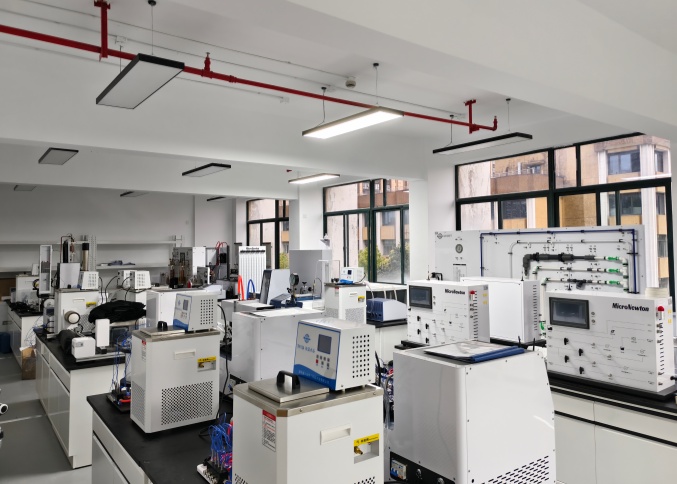
Integrated Thermal Fluids and Energy Laboratory at Zhejiang University of Technology
Flight Demonstration Wind Tunnel at Shandong University
Multi Energy Complementary Experimental Platform at Hebei University
Statically Determinate Beam Section Internal Force Testing Apparatus Delivered to Jining Vocational and Technical College
Self Developed Compression Bar Stability and Stress Testing Apparatus Delivered to Shandong Polytechnic University
01

Integrated Thermal Fluids and Energy Laboratory at Zhejiang University of Technology
MicroNewton has equipped a five zone integrated teaching laboratory at Zhejiang University of Technology. The space covers heat transfer, thermodynamics, fluid mechanics, combustion, and multi energy systems with touchscreen stations for energy and power engineering programs.
Learn More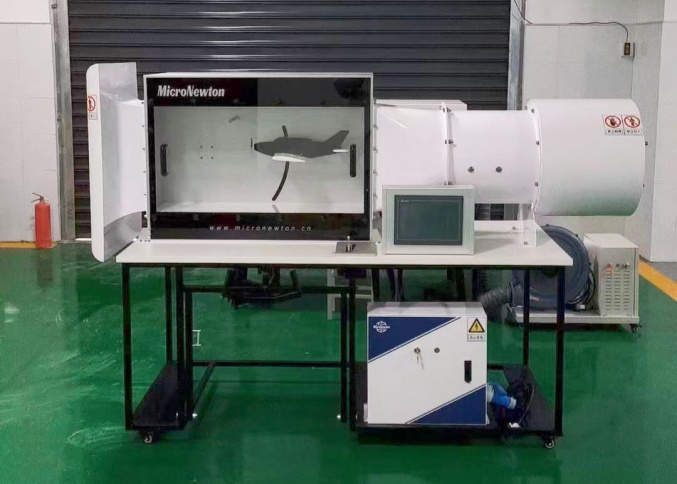
02
Flight Demonstration Wind Tunnel at Shandong University
MicroNewton has delivered a flight demonstration wind tunnel to Shandong University. Students operate a control stick to fly a NACA airfoil model in a subsonic flow, with a digital twin display showing lift, angle of attack, stall, and stability as they happen.
Learn More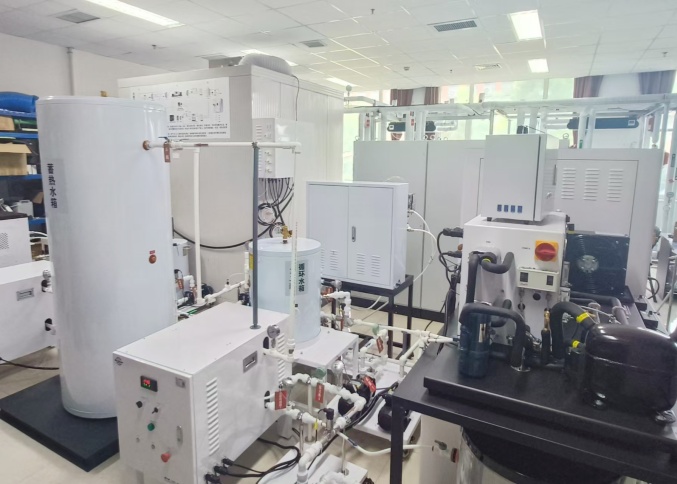
03
Multi Energy Complementary Experimental Platform at Hebei University
MicroNewton has delivered an integrated multi energy complementary experimental platform to Hebei University of Engineering. The platform combines solar, wind, hydrogen, thermal storage, and heat pump training equipment in one source, storage, and load network for student laboratories.
Learn More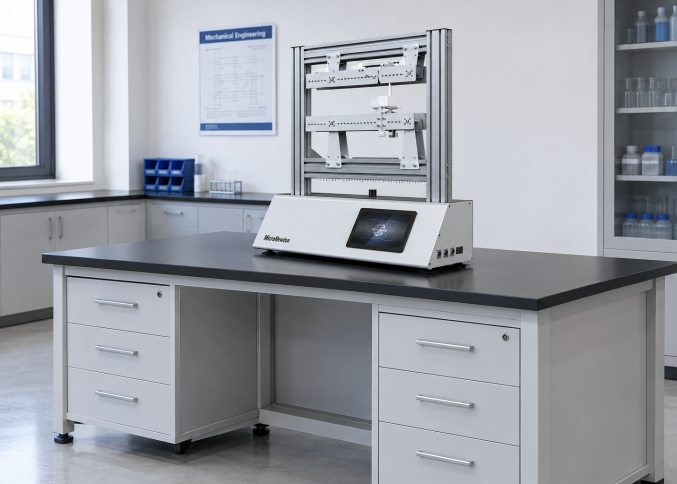
04
MicroNewton delivers self developed MST01 statically determinate beam section internal force testing apparatus to Jining Vocational and Technical College. This structural mechanics teaching equipment physically implements the section method to measure beam shear force and bending moment. It supports superposition principle verification and error analysis, suitable for civil engineering mechanical engineering and bridge related students at vocational and technical education institutions.
Learn More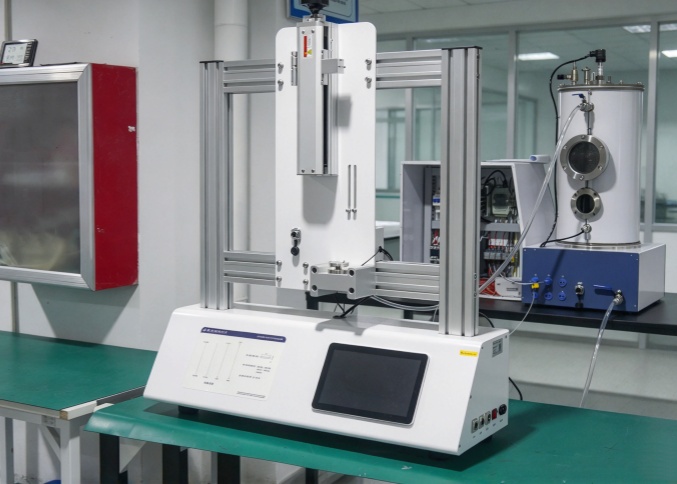
05
MicroNewton self developed MS10 compression bar stability and stress testing apparatus has been delivered to Shandong Polytechnic University. This teaching device enables students to observe column buckling, measure critical load and verify Euler formula with configurable end supports. It serves civil engineering and mechanical engineering students, helping them distinguish strength failure from stability failure and compare real experimental data against theoretical material mechanics formulas.
Learn More