Practical Renewable Energy and Energy Storage Education at Southeast University
Share:
The delivery of a Micro Wind Solar Storage and Load Demonstration Project to Southeast University provides an integrated teaching platform for renewable energy, energy storage, energy conversion, and energy management. Rather than studying individual technologies separately, students can use the system to understand how solar power, wind power, thermal energy, electrical storage, heat pumps, and loads can operate within one coordinated energy system.
Learning From an Integrated Energy System
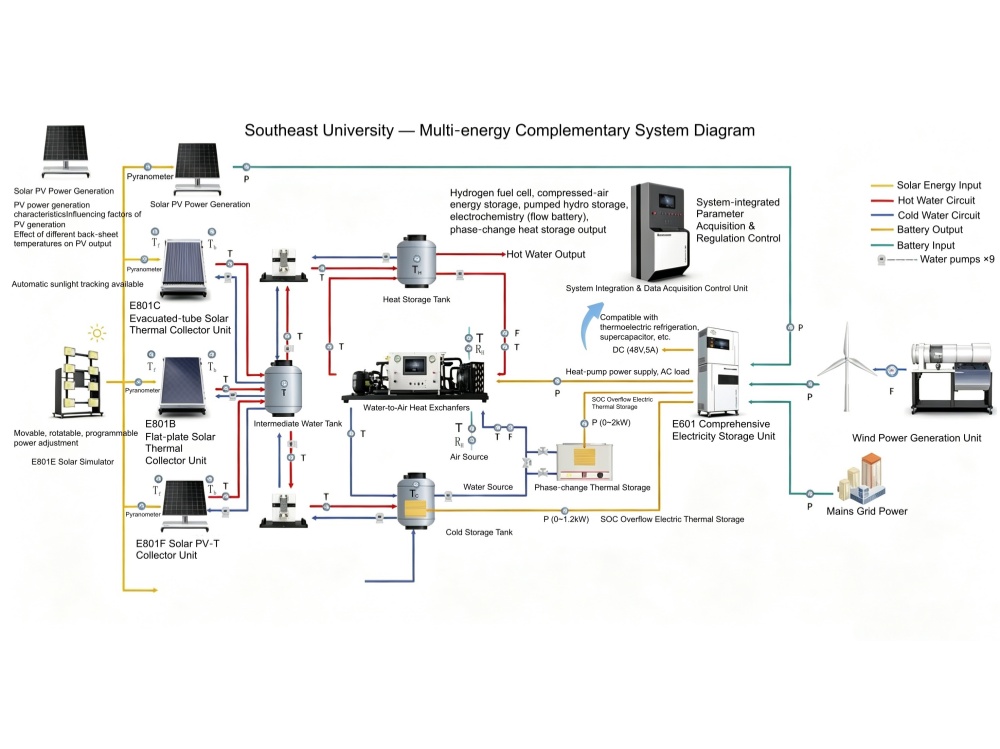
The system includes a Solar Simulation, Solar Photovoltaic Unit, Wind Turbinedynamics, Central Storage Management & Monitoring System, A Battery Storage and Discharge Monitoring System, and an Air Water Soil Triple Source Heat Pump Experimental System. Solar thermal collection and thermal storage are also integrated into the system, while the configuration can connect different energy sources, storage units, and loads.
This arrangement gives students an opportunity to understand the basic relationship between renewable energy generation, energy storage, energy conversion, energy management, and load demand. Instead of focusing only on how one device works, students can study how different energy technologies interact within an integrated energy system.
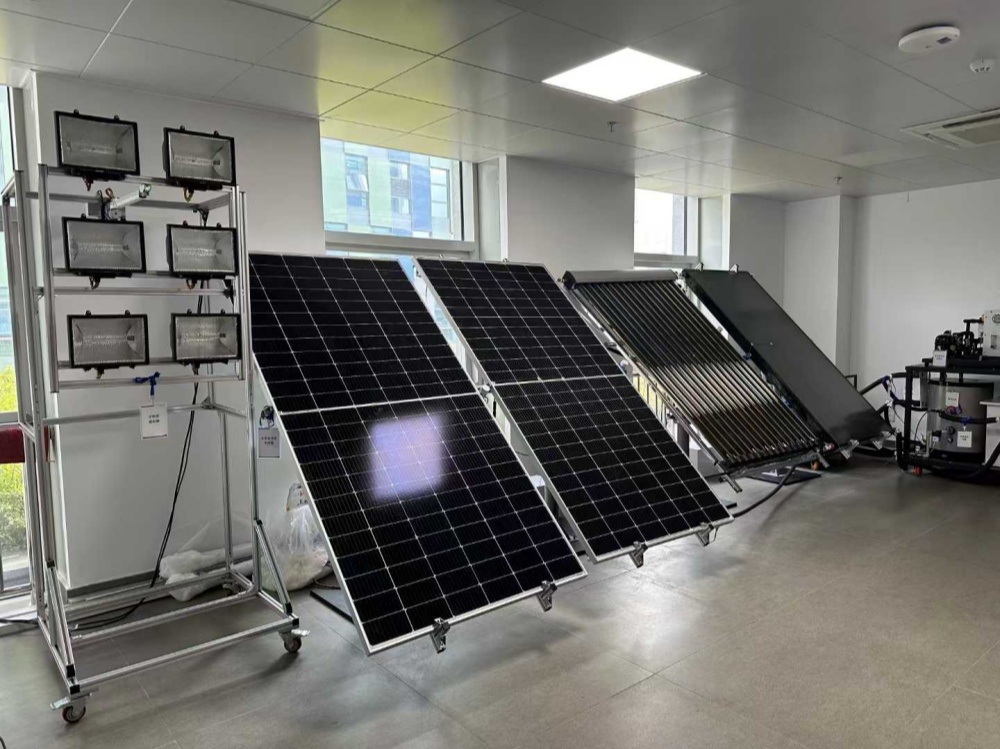
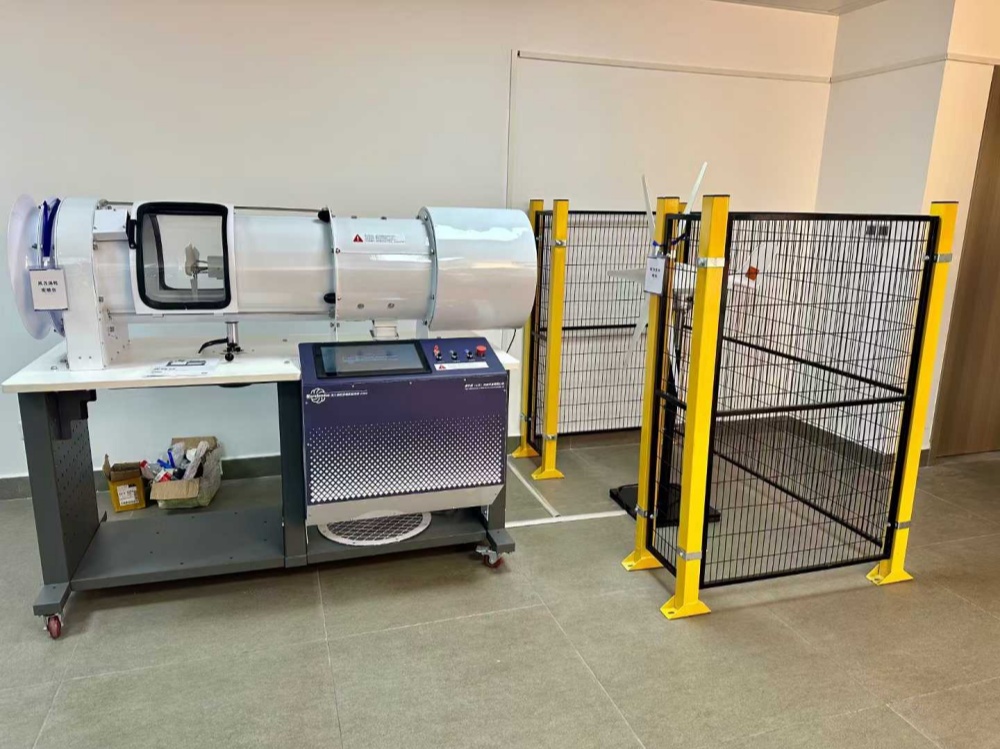
Energy storage is an important part of the teaching platform. Electrical energy generated from renewable energy sources can be connected with the Battery Storage and Discharge Monitoring System, while thermal energy can be transferred and stored through the thermal storage equipment in the system.
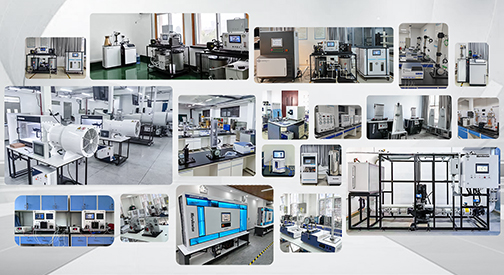
The project also provides a useful context for introducing other energy storage laboratory equipment, including the Small Supercapacitor Energy Storage Experimental Device, Electrolytic Hydrogen Fuel Cell Device, and Phase Change Energy Storage Experimental System. These devices can help students compare electrical, electrochemical, and thermal energy storage principles in laboratory teaching.
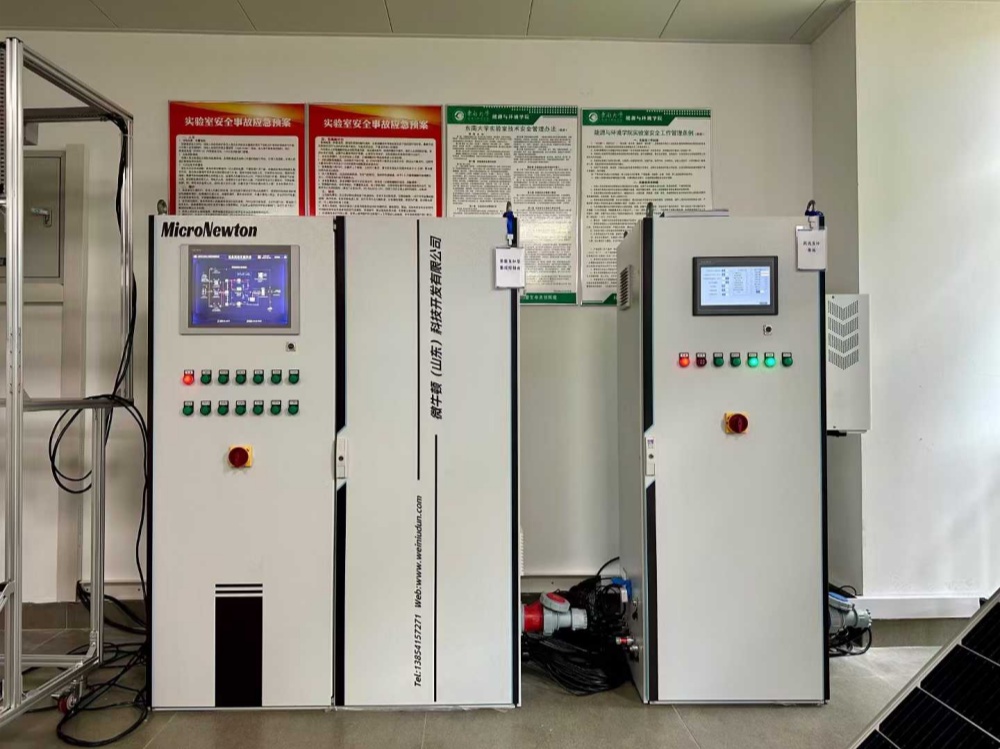
The Central Storage Management & Monitoring System provides the system level connection for data acquisition, monitoring, and operational control. This allows students to study energy flows, operating conditions, storage status, and the relationship between energy supply and load demand.
The Air Water Soil Triple Source Heat Pump Experimental System further expands the learning environment from electrical energy to thermal energy utilization. By combining renewable energy generation, heat pump operation, thermal storage, electrical storage, and loads, students can explore the concept of coordinated energy utilization.
The Micro Wind Solar Storage and Load Demonstration Project is suitable for students in Energy and Power Engineering, New Energy Engineering, Energy Storage Science and Engineering, Electrical Engineering, Mechanical Engineering, and related programs. It can support learning in renewable energy generation, battery storage, thermal storage, energy conversion, energy management, system monitoring, and integrated energy systems.
Through practical observation and experimental operation, students can develop skills in system analysis, energy flow analysis, data interpretation, experimental design, and engineering problem solving. The project therefore connects individual laboratory equipment with a broader teaching objective: helping students understand how renewable energy and energy storage technologies can work together within an integrated energy system.