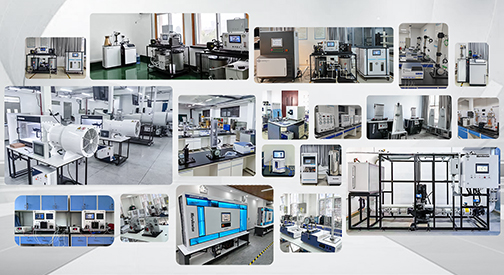
Multi Energy Complementary Experimental Platform at Hebei University
Share:
HANDAN, China: Hebei University of Engineering has commissioned a multi energy complementary experimental platform from MicroNewton for its new energy teaching laboratories. The platform links energy sources, storage units, and real heating and cooling loads in one network, so students can operate an entire energy system rather than study isolated devices.
The university wanted a teaching system that presents thermal, electrical, and renewable energy as one connected chain. MicroNewton delivered the platform in three blocks: source, storage, and load. A central management and monitoring unit reads temperatures, pressures, flow rates, and power from every device and combines the signals into one control screen. Energy can be tracked as it enters the platform, rests in storage, and leaves through live heating and cooling equipment.
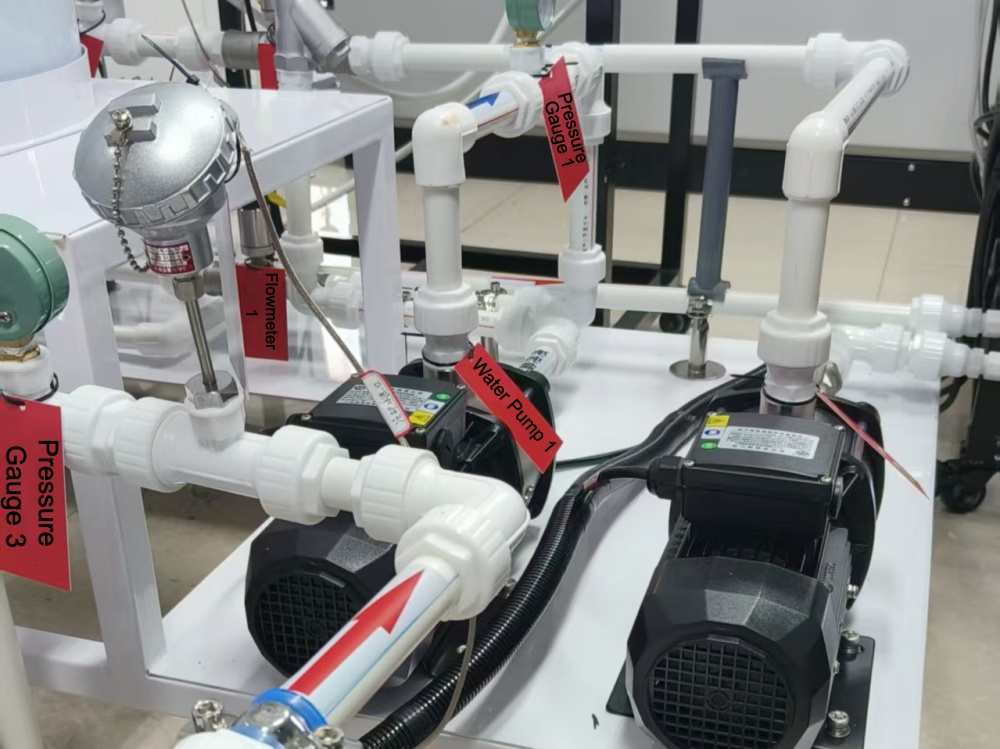
The source block lets learners compare six ways to supply energy:
Laboratory sessions measure each source independently, then run them together. Learners compare collector output by type and observe how sources compensate when one supply weakens.
Storage is the core teaching section. Instead of a single demonstrator, the platform places eight technologies side by side:
A heat storage tank and a cold storage tank hold thermal energy, while the electrical storage units hold power. Any unit can be charged from the solar or wind source and discharged to a load. Test groups compare response speed, capacity, and energy loss across thermal, mechanical, electrochemical, and hydrogen routes.
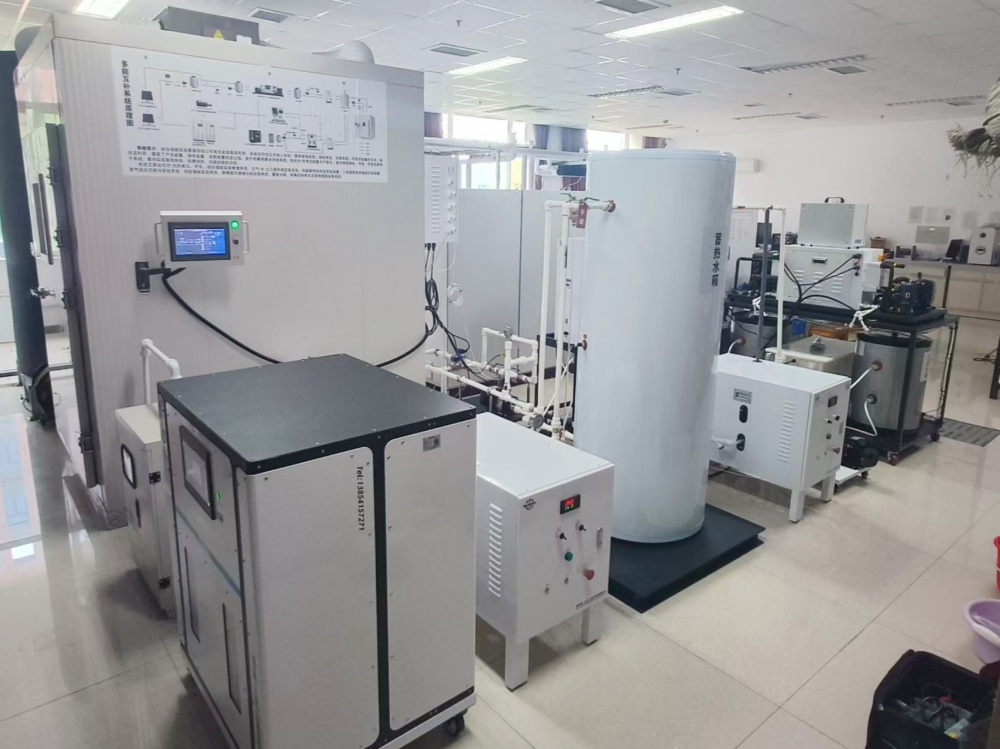
On the load side, stored energy feeds four types of working equipment:
Heating and cooling loads are switched on and off during experiments, showing how the platform meets demand from storage and sources in real time. The same session can contrast a heat pump with an absorption chiller, which use energy in fundamentally different ways.
Explore Heat Pump and Air Conditioning Training Equipment
The platform supports four programs: new energy science and engineering, energy and power engineering, building environment and energy engineering, and electrical engineering. Practical work covers solar thermal and photovoltaic conversion, wind and grid power coordination, thermal and electrical storage comparison, heat pump and absorption refrigeration operation, and energy dispatch from a central monitoring screen. Through these sessions, learners move from memorizing individual devices to managing a live energy network.
The source, storage, and load blocks share one piping and electrical network rather than functioning as standalone trainers. Commissioning at Hebei University of Engineering included connection of all blocks, calibration of the central monitoring unit, and verification of charge and discharge paths. The university now operates a complete integrated energy system trainer for teaching, demonstrations, and student research.
MicroNewton designs multi energy complementary experimental platforms and renewable energy teaching systems for universities worldwide. Tell us about your laboratory plan and request a tailored configuration.
What is a multi energy complementary experimental platform?
It is a university teaching system that connects renewable energy sources, several storage technologies, and real heating and cooling loads in one controllable network, so students can study how energy is produced, stored, and dispatched as a complete system.
What energy sources are included in the Hebei University platform?
Evacuated tube and flat plate solar thermal collectors, a photovoltaic unit, a wind generation unit, a steam turbine unit, grid power, and a solar simulator for repeatable tests in any weather.
Which energy storage technologies can students compare?
Eight options: phase change thermal storage, mini compressed air storage, small pumped hydro storage, flywheel storage, supercapacitor storage, a flow battery, an electrolytic hydrogen fuel cell system, and a battery charge and discharge monitoring unit. Heat and cold storage tanks cover thermal energy.
What loads are used in the experiments?
An electromagnetic boiler, a steam absorption refrigeration system, a triple source heat pump using air, water, or ground sources, and terminal units including fan coils, radiators, and radiant coils.
Which university programs use the platform?
New energy science and engineering, energy and power engineering, building environment and energy engineering, and electrical engineering.
How is this platform different from separate energy trainers?
All blocks share one piping and electrical network with central monitoring. Learners run complete production, storage, and load scenarios instead of testing each device alone.