Developing Practical Refrigeration Education at Shanghai Jiao Tong University
Share:
The delivery of a Vapor Compression Refrigeration Cycle Device to Shanghai Jiao Tong University supports laboratory teaching in engineering thermodynamics, refrigeration, and air conditioning. The equipment provides a complete experimental platform for studying the operation of a vapor compression refrigeration cycle, allowing students to connect thermodynamic theory with measurable system behavior. The supplied device is intended for refrigeration principle experiments within Energy and Power Engineering education.
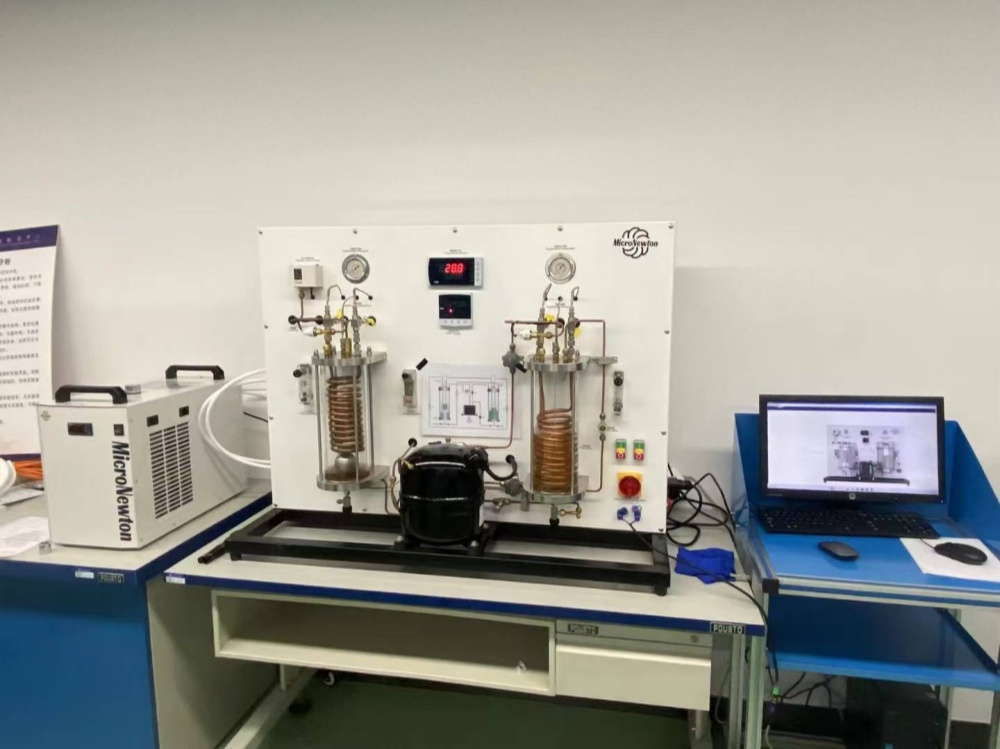
A vapor compression refrigeration cycle is built around four main components: the compressor, condenser, expansion valve, and evaporator. The Vapor Compression Refrigeration Cycle Device arranges these components on an experimental platform so that the refrigeration process can be observed directly.
During operation, students can monitor key variables including refrigerant flow, evaporation pressure, condensation pressure, refrigerant temperature, water temperature, and compressor power. The system therefore provides both a physical view of the refrigeration cycle and measurable data for classroom analysis.
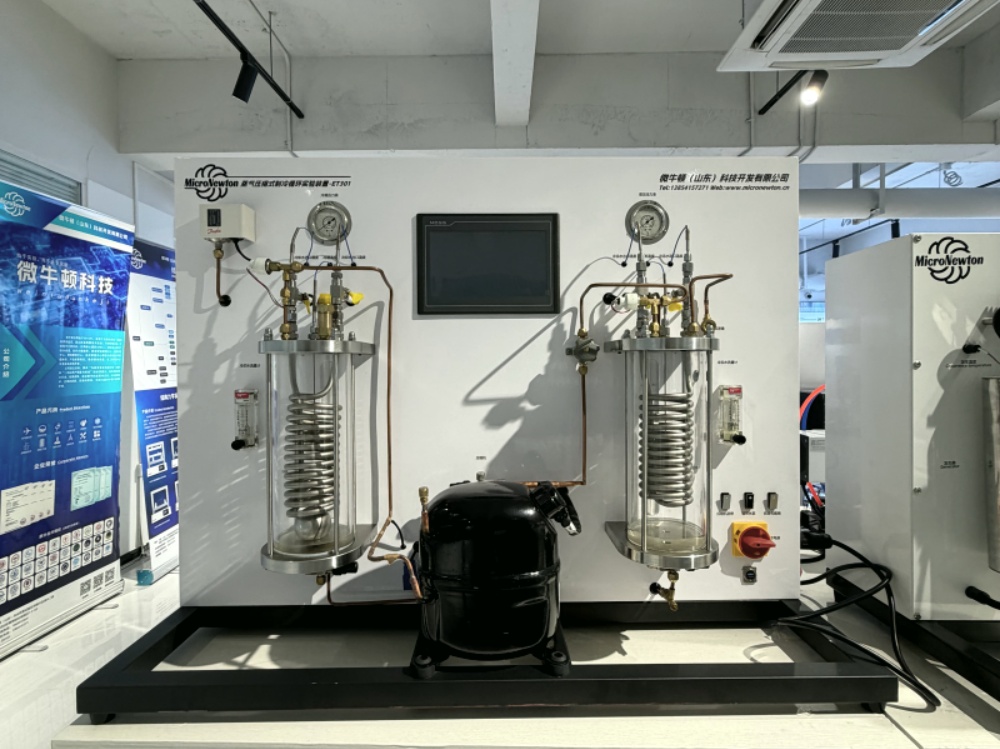
For Shanghai Jiao Tong University, the Vapor Compression Refrigeration Cycle Device can support several teaching experiments related to refrigeration and air conditioning. Students can measure the coefficient of performance of the refrigeration cycle, compare an actual refrigeration cycle with an ideal cycle, investigate how flow rate influences refrigeration performance, observe evaporation and condensation phenomena, and study performance changes under different evaporation and condensation temperatures.
These experiments allow students to move beyond memorizing the refrigeration cycle and examine how each operating condition affects system performance. For example, measured pressure and temperature values can be used to understand the states of the refrigerant at different points in the cycle, while experimental results can be compared with theoretical calculations and represented through performance curves.
The Vapor Compression Refrigeration Cycle Device also supports learning around the pressure enthalpy diagram and the thermodynamic processes within the refrigeration cycle. Students can examine evaporation, compression, condensation, and throttling, and relate these processes to heat transfer and energy conversion.
The equipment documentation specifically introduces the theoretical refrigeration cycle through the pressure enthalpy diagram and explains the thermal and energy changes associated with each major component.
This makes the refrigeration laboratory equipment useful for developing an understanding of refrigeration capacity, compressor work, coefficient of performance, heat transfer, pressure temperature relationships, and the difference between theoretical and actual system operation.
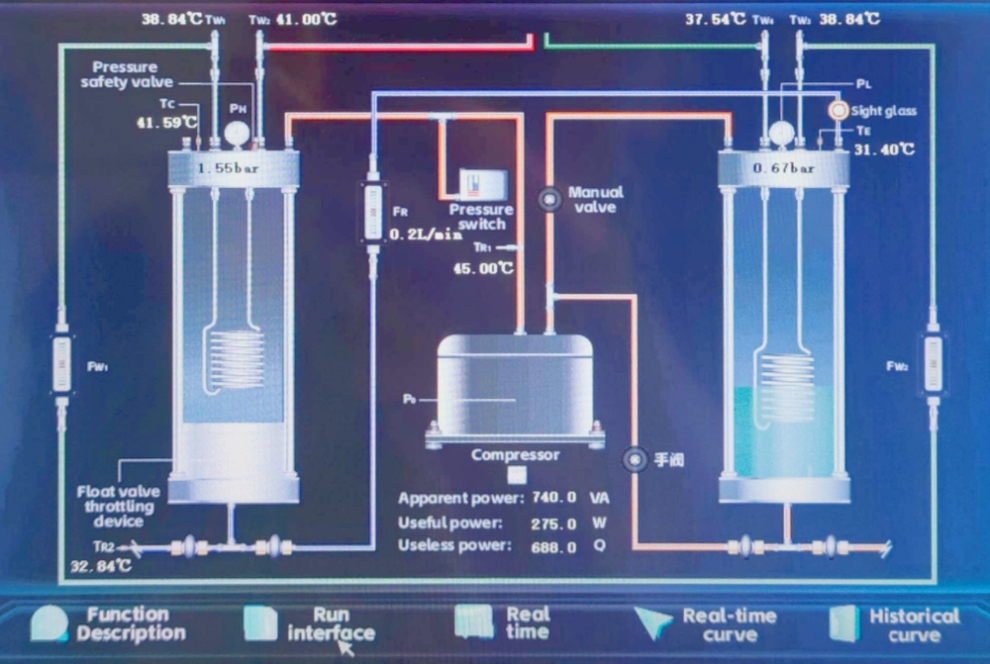
The delivered Vapor Compression Refrigeration Cycle Device is suitable for students studying Energy and Power Engineering, Thermal Engineering, Mechanical Engineering, Refrigeration and Air Conditioning, and related disciplines. Through repeated laboratory operation, measurement, calculation, and data analysis, students can develop practical skills alongside their theoretical knowledge.
The experiments also encourage students to identify relationships between operating conditions and system performance, interpret experimental error, analyze energy conversion processes, and draw conclusions from measured data. The product materials specifically include experimental objectives related to understanding refrigeration principles, interpreting the pressure enthalpy diagram, analyzing performance changes, and developing students' ability to conduct exploratory experimental work.
For Shanghai Jiao Tong University, the delivery provides a dedicated Vapor Compression Refrigeration Cycle Device for practical study of refrigeration and air conditioning principles. By combining visible refrigeration components, measurable operating parameters, and structured refrigeration experiments, the system helps create a teaching environment in which students can connect engineering thermodynamics with the operation and analysis of real refrigeration systems.