Building Practical Fluid Mechanics Education at Moutai University
Share:
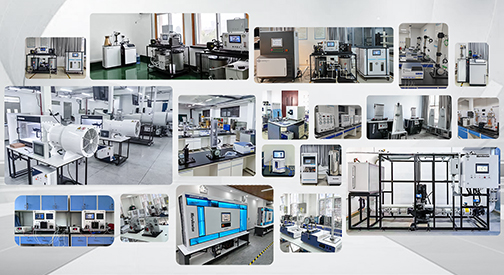
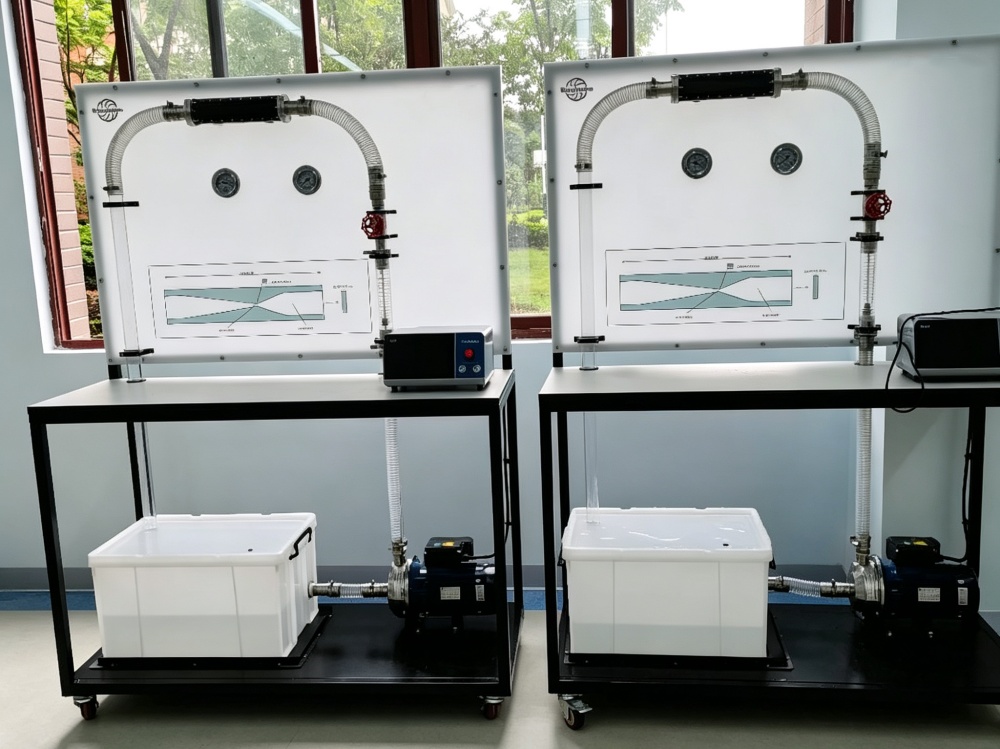
The delivery of a group of Fluid Mechanics Laboratory Equipment to Moutai University creates a broader experimental environment for teaching fluid properties, pipe flow, flow measurement, fluid resistance, cavitation, and flow visualization. The delivered group includes Fluid Friction Apparatus, Osborne Reynolds Apparatus, Digital Hydraulic Bench, Cavitation in a Venturi, Flow Field Demonstration Apparatus, Flow Meter Calibration, and Vortex Apparatus. Together, these systems support a teaching approach that connects fluid mechanics theory with direct observation, measurement, calculation, and experimental analysis.
Fluid mechanics education involves concepts such as pressure, flow rate, velocity, Reynolds number, head loss, friction, and flow patterns. Laboratory experiments allow students to see how these parameters change under different flow conditions and how theoretical relationships can be verified using measured data.
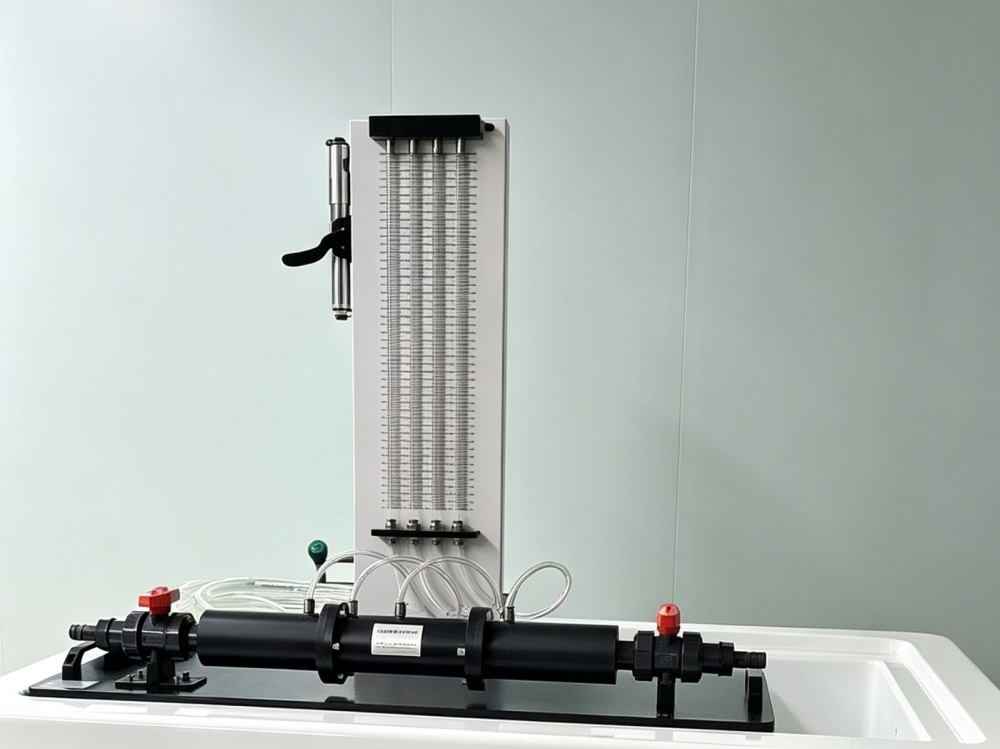
The equipment supplied to Moutai University covers several complementary areas. The Osborne Reynolds Apparatus can support the study of flow regimes and Reynolds number, while the Digital Hydraulic Bench provides a practical hydraulic circulation platform. Cavitation in a Venturi introduces cavitation behavior, and Flow Meter Calibration supports measurement principles and calibration analysis. Flow Field Demonstration Apparatus and Vortex Apparatus further extend teaching into flow structures and vortex behavior.
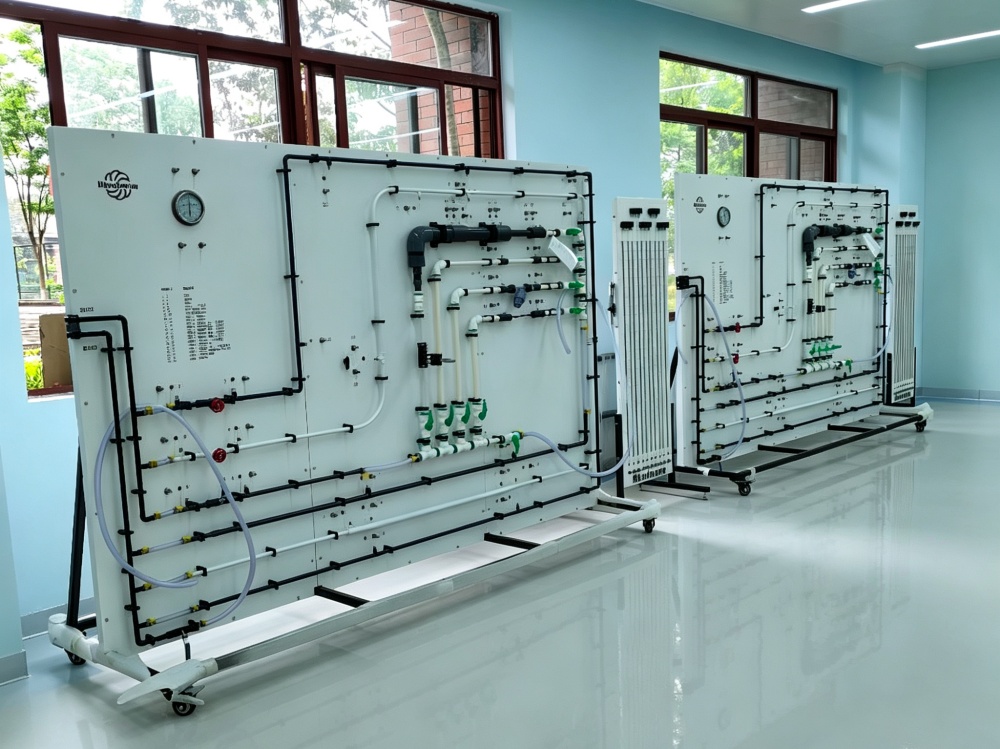
The Fluid Friction Apparatus is one of the key products in this delivery. It is designed to work with a basic hydraulic bench to investigate frictional resistance and head loss when water flows through different pipes and pipe fittings. The system includes smooth pipes, rough pipe sections, valves, bends, expansion and contraction sections, Venturi and orifice flow meters, and a Pitot tube section.
This configuration allows students to investigate both major losses and local losses. In a straight pipe, friction between the flowing fluid and pipe wall produces head loss, while valves, bends, sudden changes in pipe area, and other fittings produce local losses. Students can measure flow rate and pressure difference, then calculate velocity, Reynolds number, friction factor, and head loss.
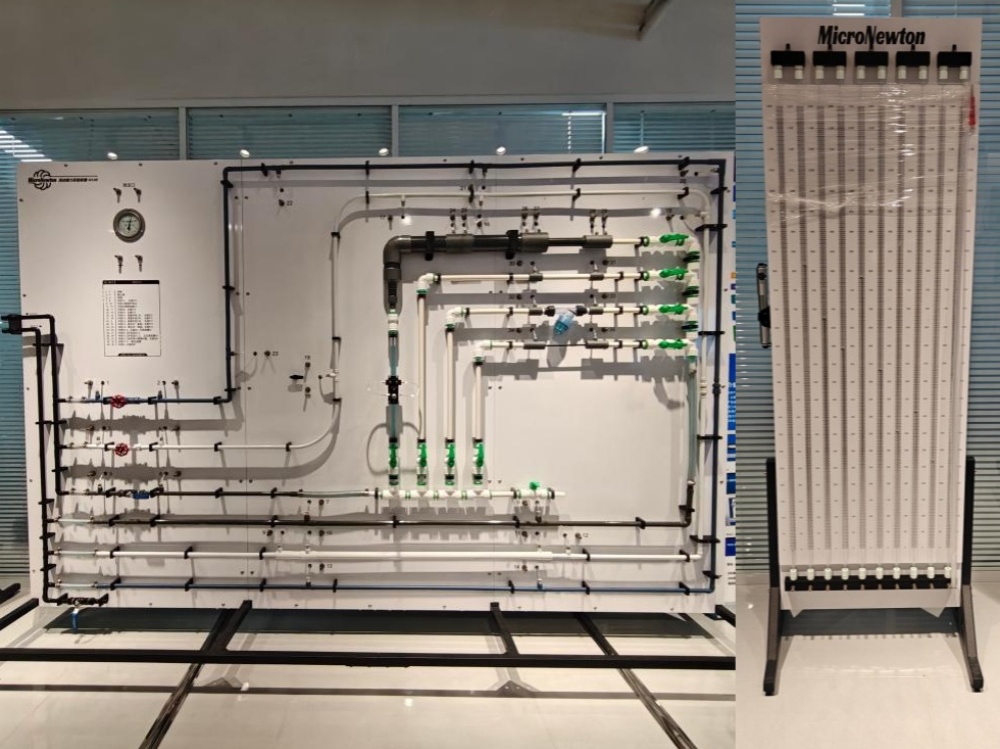
The Fluid Friction Apparatus also introduces students to practical flow measurement. Its configuration includes an orifice flow meter, Venturi flow meter, and Pitot tube, allowing students to compare different approaches to flow measurement and study the relationship between pressure difference and flow rate.
Other experiments within the system can investigate valve head loss, bend head loss, rough pipe flow, Venturi flow measurement, orifice flow measurement, and Pitot tube correction. These activities help students understand Bernoulli principles, continuity, Reynolds number, friction factor, pressure loss, flow coefficient, and flow measurement through experimental data.
The delivered equipment can also be considered alongside other fluid mechanics teaching systems such as Hydrostatics and Properties of Fluids, Metacentric Height and Stability, and 2.5 Metre Flow Channel. These types of experimental equipment can extend learning from basic fluid properties and hydrostatics to stability, open channel flow, internal pipe flow, and flow resistance.
For students in Fluid Mechanics, Mechanical Engineering, Civil Engineering, Hydraulic Engineering, Marine Engineering, Energy and Power Engineering, and related programs, this combination provides opportunities to develop experimental operation, measurement, calculation, data processing, and engineering analysis skills.
The delivery to Moutai University therefore supports a practical Fluid Mechanics Laboratory environment in which students can connect fundamental theory with measurable flow phenomena. Through Fluid Mechanics Experiments, students can develop a clearer understanding of fluid resistance, flow behavior, pressure loss, flow measurement, and related engineering applications.