Beihang University Advances Aerospace Engineering Research with Aerospace Extreme Environment Wind Tunnel System
Share:
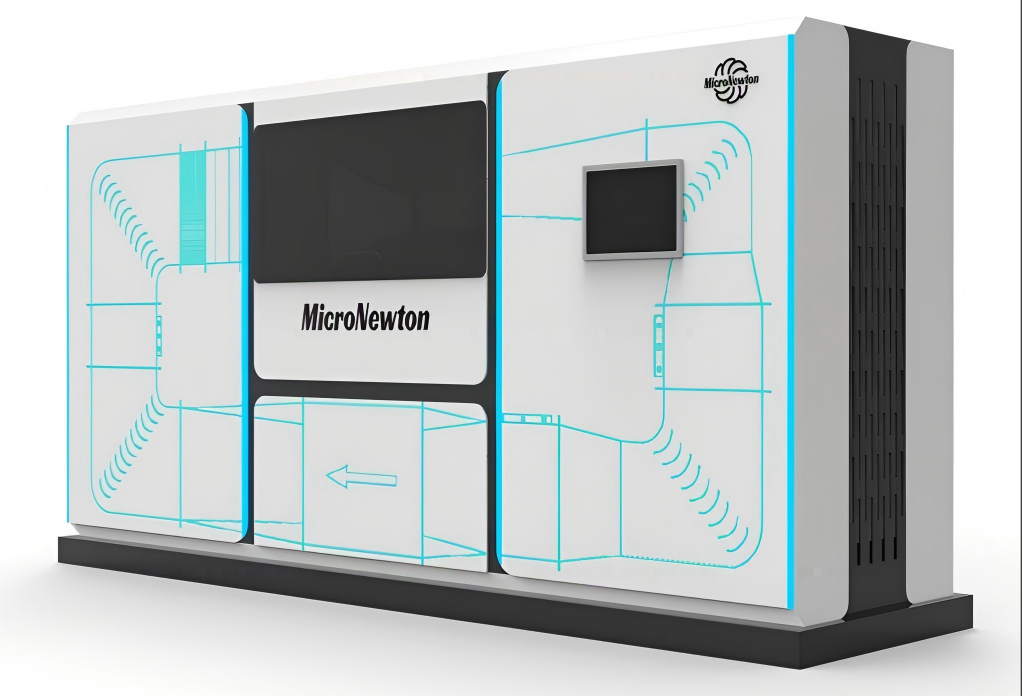
Beijing University of Aeronautics and Astronautics (Beihang University), one of China's premier institutions for aerospace engineering education and research, has strengthened its experimental infrastructure with the installation of MicroNewton's Aerospace Extreme Environment Wind Tunnel System. This advanced wind tunnel enables researchers and students to conduct aerodynamic testing under simulated extreme environmental conditions, bridging the gap between theoretical aerodynamics and real world aerospace applications.
Unlike a conventional subsonic wind tunnel that only provides airflow, the Aerospace Extreme Environment Wind Tunnel System integrates multiple environmental simulation modules within a single platform, allowing researchers to replicate the complex conditions that aircraft and unmanned aerial vehicles encounter in flight.
The Aerospace Extreme Environment Wind Tunnel System is a comprehensive environmental simulation wind tunnel designed for aerospace engineering research and teaching. It combines airflow generation with precise environmental control, making it far more versatile than a standard subsonic wind tunnel for studies that require realistic flight conditions.
The wind tunnel features a vaporcompression directexpansion refrigeration system with a finnedtube heat exchanger, enabling precise temperaturecontrolled wind tunnel operation from -30 °C to +50 °C. A variablefrequency highpressure compressor and PID temperature control deliver a control accuracy of 0.1 °C with a testsection temperature uniformity of less than 0.5 °C, making it ideal for lowtemperature and hightemperature aerodynamic testing.
The system can simulate icing wind tunnel conditions through timed watermist spraying, allowing ice layers of up to 20 mm thickness to form on test specimens within one hour. It also supports simulated rainfall at rates of 0-5 mm/min, enabling researchers to study the effects of precipitation on aerodynamic surfaces and aircraft components.
A lowspeed windtunnel standard dustgeneration device provides controllable dust simulation at concentrations ranging from 0 to 1000 mg/m3, supporting research on particulate erosion, environmental durability, and aerodynamic performance degradation in dusty environments.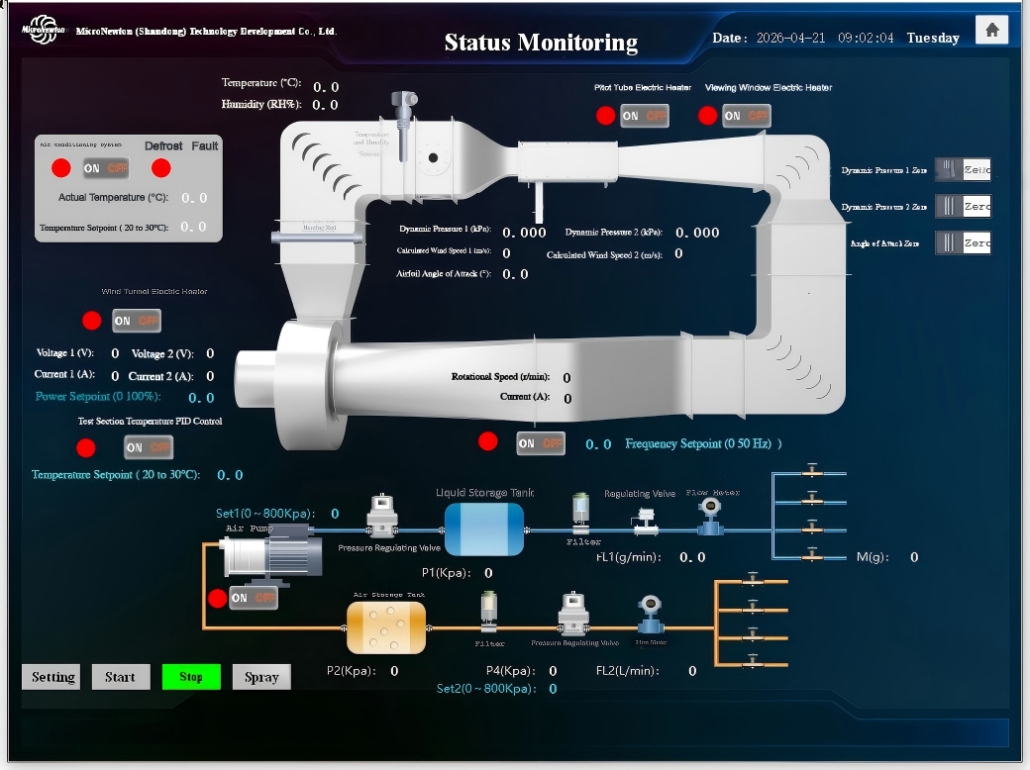
The Aerospace Extreme Environment Wind Tunnel System is equipped with an integrated control and acquisition module that manages power supply, operation control, safety monitoring, and data collection for the entire system. The control cabinet features a 10.1inch touchscreen display that shows realtime flow velocity, temperature, pressure, flow rate, and valve opening.
The system also provides computer input/output data interfaces and supports data export to USB drives, ensuring seamless integration with research workflows and postprocessing analysis. Additional integrated components include a variablefrequency drive, liquid water content detection, a multichannel temperature acquisition system, a highpower programmable DC regulated power supply, and air volume / wind speed monitoring.
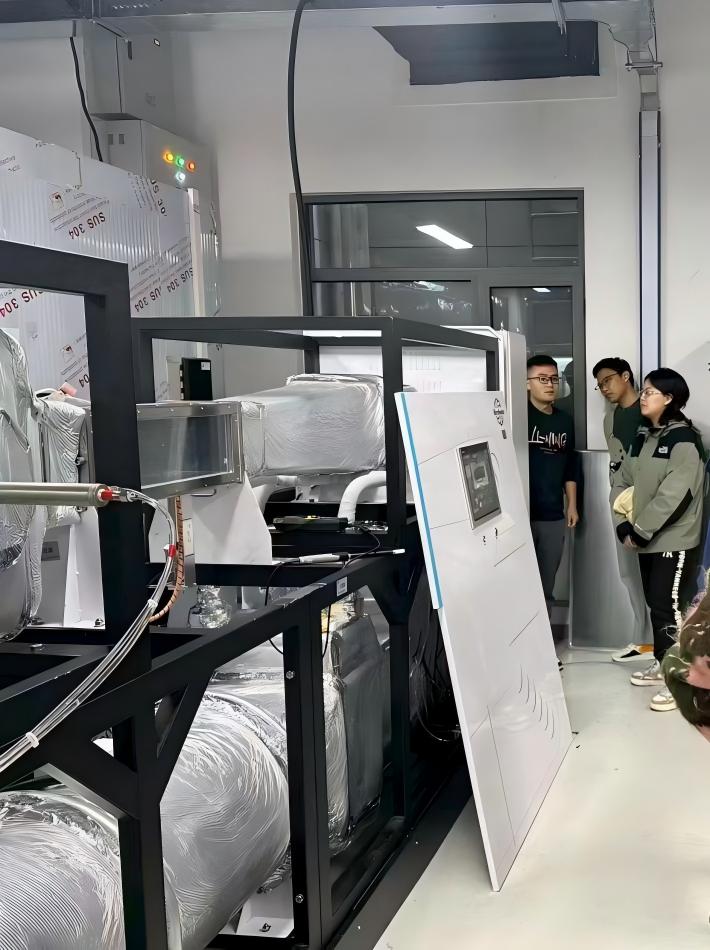
At Beihang University, the Aerospace Extreme Environment Wind Tunnel System supports a wide range of aerospace engineering research and teaching activities, including:
The wind tunnel's ability to combine airflow with environmental simulation makes it a versatile tool that goes beyond traditional subsonic wind tunnel testing. Beihang University researchers can now investigate how extreme environmentscold, heat, ice, rain, and dustaffect aerodynamic behavior, a critical consideration for aircraft and spacecraft operating in diverse climatic conditions.
Conclusion
MicroNewton's Aerospace Extreme Environment Wind Tunnel System has enhanced Beihang University's aerospace engineering research and teaching infrastructure. By providing a single platform that integrates aerodynamic testing with temperature, icing, rain, and dust environmental simulation, the wind tunnel empowers researchers and students to explore the full spectrum of aerospace environmental challenges.
For institutions seeking to advance their aerodynamics and environmental simulation wind tunnel capabilities, the Aerospace Extreme Environment Wind Tunnel System offers a comprehensive, integrated solution.
Previous:
Custom Aviation Museum Wind Tunnel Brings Aerodynamics to Life at Northwestern Polytechnical University
Next:
In 2026, a new batch of compressed air energy storage teaching experimental equipment was successfully delivered, empowering universities with micro-newton technology for new energy teaching