Advancing Hands‑On Fluid Mechanics Education at Tsinghua University
Share:
The recent delivery of the H501 Small Water Tunnel Test Platform to Tsinghua University delivers a dedicated experimental resource for hands‑on fluid mechanics instruction and related engineering disciplines. This system generates steady, low‑turbulence test flow and works with interchangeable test sections and specimen models, enabling students to analyse fluid behaviour via direct visual observation and quantitative measurement.
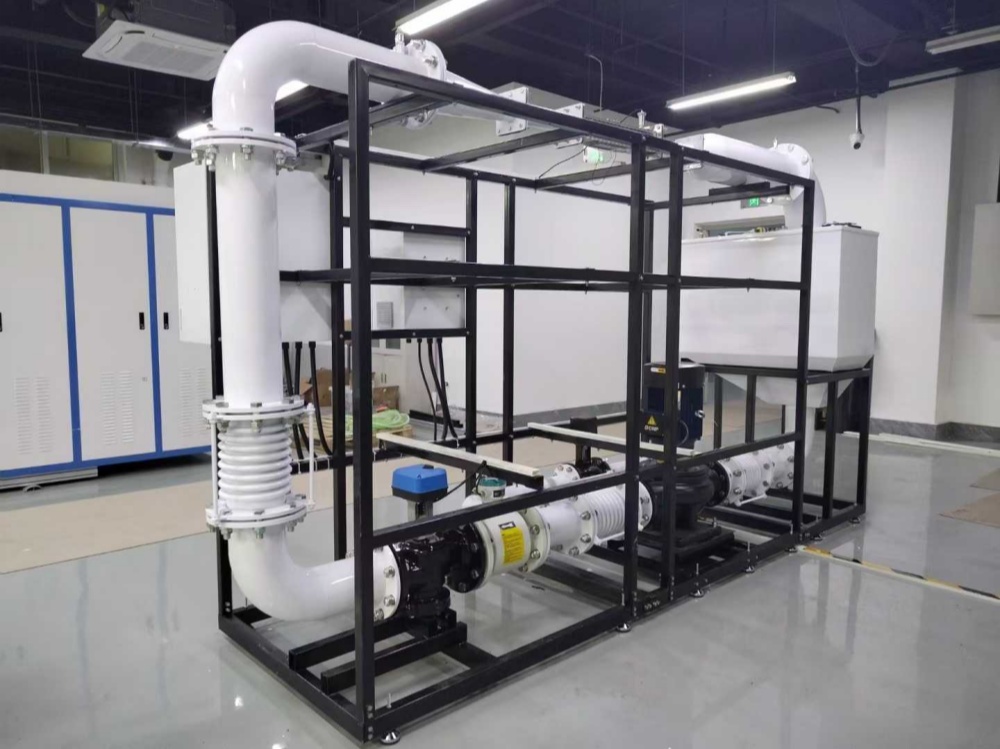
The H501 Small Water Tunnel Test Platform comprises a contraction section, test section, diffuser section, axial‑flow pump, flow‑straightening unit and flow‑stabilising chamber. Operators can regulate flow velocity using control valves and frequency converters, and the test chamber supports swap‑out experimental models for varied research tasks.
This setup creates a tangible lab environment for fluid mechanics principles that are often taught solely through mathematical formulas and theoretical simulations. With different fitted models, educators can run experiments covering fluid drag and lift forces, boundary‑layer formation, complex flow structures and bionic fluid applications. Custom‑built test sections and specialised models are also available for advanced experimental projects.
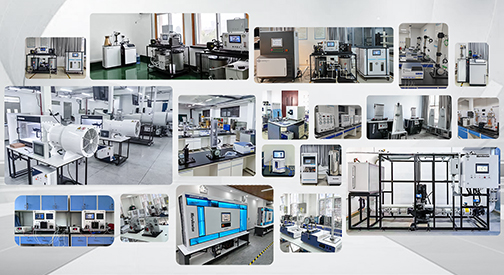
The Small Water Tunnel Test Platform integrates seamlessly with other fluid‑mechanics teaching hardware: Fluid Friction Apparatus, Hydrostatics and Properties of Fluids Unit, Venturi Cavitation Test Set, and Series‑Parallel Pump Demonstration Unit. Combined, this suite of laboratory instruments supports practical learning spanning fluid properties, static pressure, pipe flow dynamics, pump performance characteristics, cavitation phenomena, flow drag and external flow analysis.
These lab tools bridge abstract fluid‑mechanics theory and real‑world engineering flow scenarios. The Fluid Friction Apparatus illustrates pipe‑system pressure drop and frictional losses, while the Series‑Parallel Pump unit demonstrates pump operational logic and overall system performance. Supplementary experiments cover hydrostatic fundamentals and cavitation behaviours.
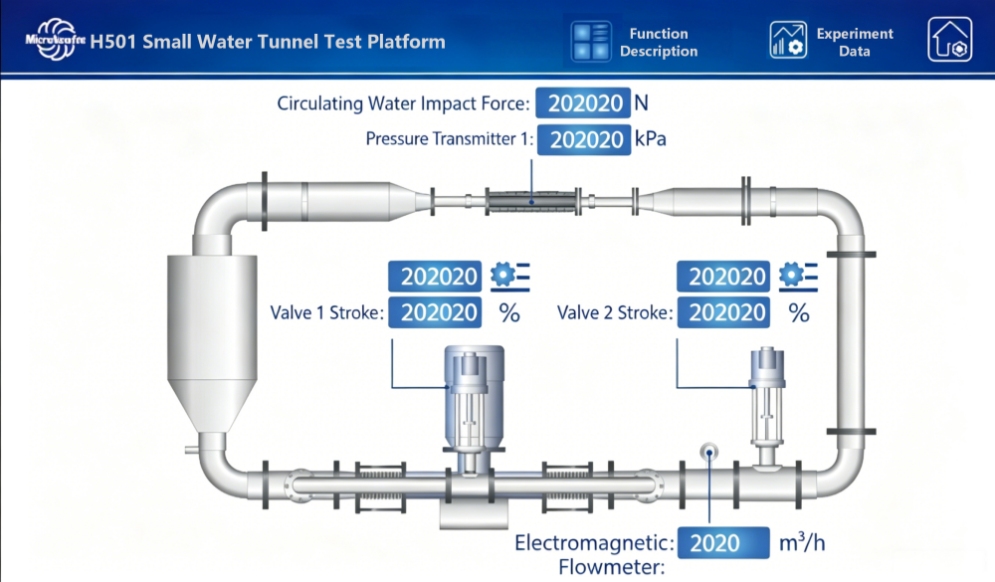
As users modify flow parameters on the H501 platform, the system outputs authentic experimental datasets alongside visual model responses. Its control interface displays real‑time flow rate, valve positioning, pressure values and fluid impact force; the built‑in water tank is fitted with a water‑level indicator to monitor circulating water status.
Supported experimental workflows include drag‑lift force measurement, boundary‑layer transition testing, flow visualisation trials and cavitation‑related analysis. These lab exercises build student comprehension of flow signatures, pressure influences, boundary‑layer evolution, drag, lift and complex flow architectures.
The deployed H501 water tunnel system serves students majoring in Fluid Mechanics, Mechanical Engineering, Aerospace Engineering, Civil Engineering, Marine Engineering and adjacent technical fields. Hands‑on lab operations, model testing, data acquisition and analytical processing help learners master core competencies: experimental design, engineering observation, quantitative data interpretation and troubleshooting skills.
For Tsinghua University, this new installation strengthens applied fluid‑mechanics pedagogy. It connects textbook theoretical axioms to observable flow patterns and measurable empirical results. Thanks to flexible model and flow‑condition configurations, the platform accommodates routine teaching labs as well as extended student‑led research initiatives.